Spain's High-Speed Collision Breaks the Operational Myth of Absolute Rail Automation
A deadly crash south of Madrid challenges the foundational assumption that digital interlocking eliminates kinetic risk on dense passenger corridors.
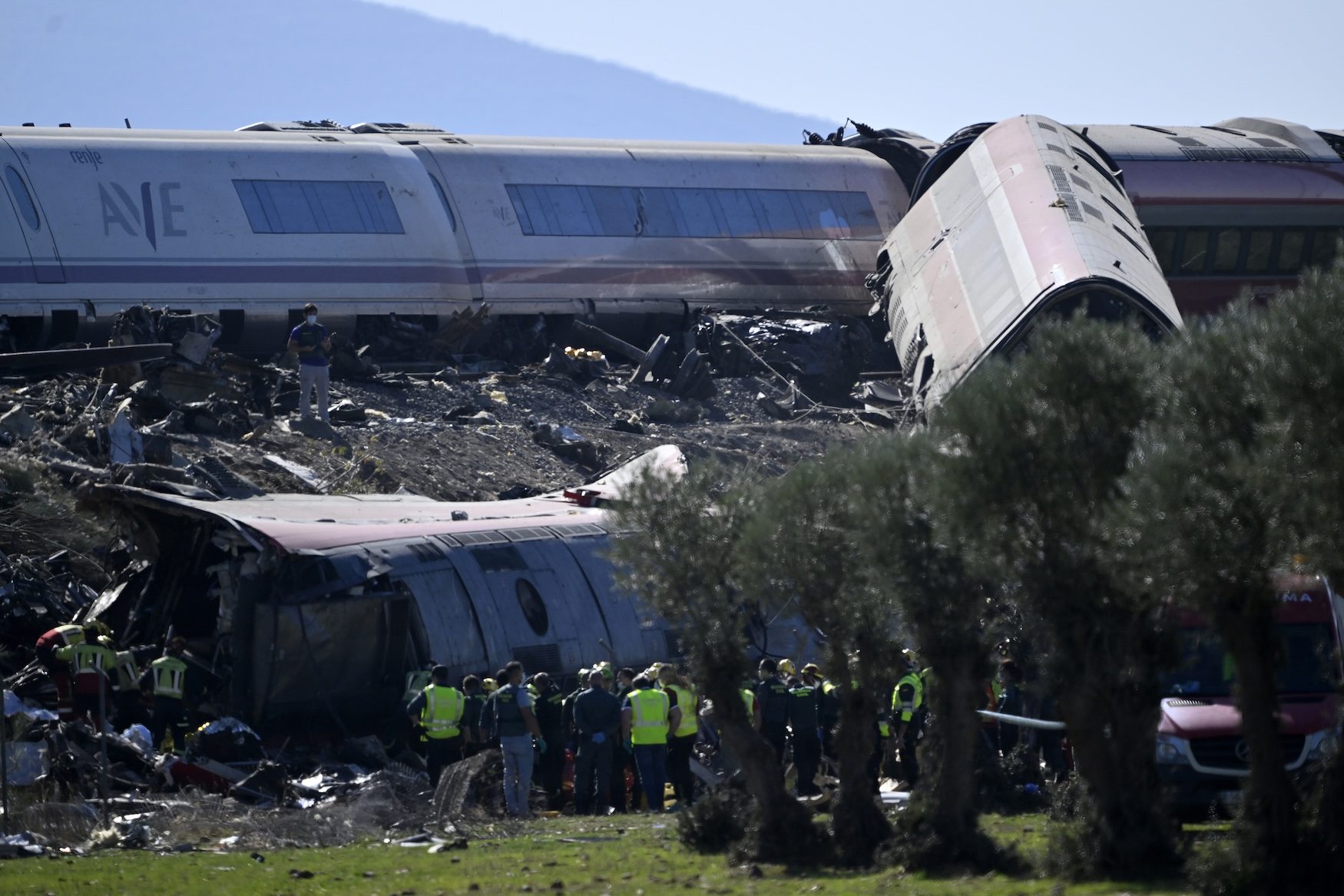
SINGAPORE
High-speed rail doctrine rests on an uncompromising historical calculation: mechanical components will inevitably fracture, but digital interlocking must guarantee that two passenger convoys never occupy the same block. The wreckage in Urda destroyed that baseline. South of Madrid, two high-speed trains collided on Wednesday, Oct 28, 2026, throwing carriages down an embankment in Castilla-La Mancha. At least 10 people died immediately, with authorities confirming 68 fatalities and scores injured in one of Europe's deadliest such disasters this century. Dozens of emergency services vehicles converged on the site as carriages lay in tangles of metal debris. Beyond the emergency response, the disaster strikes at systemic assumptions. The second such accident to strike Spain this year will raise fresh questions about the country's rail safety.
Repetition dismantles the defence of freak misfortune.
Spain spent three decades constructing what transport ministries worldwide treated as an exportable template for rapid, energy-efficient trunk transit. The operational social contract on these corridors did not promise that equipment would never malfunction; rather, it promised that redundant fail-safes would arrest kinetic energy long before two trains could share the same coordinates. When that redundancy fails, the breakdown shifts from an isolated equipment defect to institutional stress across dispatch controls, track-allocation software, and preventative maintenance schedules.
Systems Under Pressure
Transit authorities frequently defend rapid rail by citing favourable fatality rates relative to regional highway networks. While statistically accurate, that metric misjudges why governments and commuters commit capital to dedicated rights-of-way. Highway transit assumes driver error. Rapid rail promises mathematical certainty through computerized block controls, automatic train protection, and centralized track monitoring.
Operational safety relies not on the complete absence of mechanical faults, but on the certainty that automated redundancies will arrest moving equipment before impact.
Urda proves that electronic safeguards cannot perpetually absorb the friction of congested timetables. If signaling telemetry detected an obstruction, investigators must explain why physical braking systems failed to enforce separation. If software failed to broadcast warnings, the breakdown exposes vulnerabilities in computerized traffic management that operators have long dismissed as functionally impossible.
Compressing Safety Margins
Across the Asia-Pacific, where cross-border trunk lines and domestic networks increasingly deploy European-derived signalling specifications, the implications are immediate. Planners in fast-growing regional markets routinely justify compressed headways and intensive rolling-stock utilization on the assumption that automated oversight eliminates physical collision risk. Software is treated as a substitute for physical track buffers. Yet when passenger demand rises and schedule density peaks, the maintenance windows required for track realignment, optical sensor testing, and physical braking overhauls inevitably shrink.
Electronic diagnostics cannot fully substitute for disciplined physical inspection. Spain possesses one of the world's most established high-speed operating cultures, yet its institutional safeguards could not insulate it from catastrophic failure. Newer operators managing dense passenger corridors face the exact same tension between schedule frequency and infrastructure recovery.
Public confidence will not return through routine official condolences. Transport authorities in Madrid must establish why interlocking protocols failed to keep two trains apart on a controlled alignment. For international planners watching the recovery in Urda, the lesson is unsparing: no software architecture can permanently offset the physical wear of compressed operational margins.
Sources
Newsletter
Pacific Daily
A curated briefing from Thailand, Asia-Pacific and the world.