Singapore Strait Incidents: The Cost of Congestion
Repeated collisions in critical waterways underscore fundamental challenges to maritime safety and efficiency, with wider implications for regional trade.
SINGAPORE
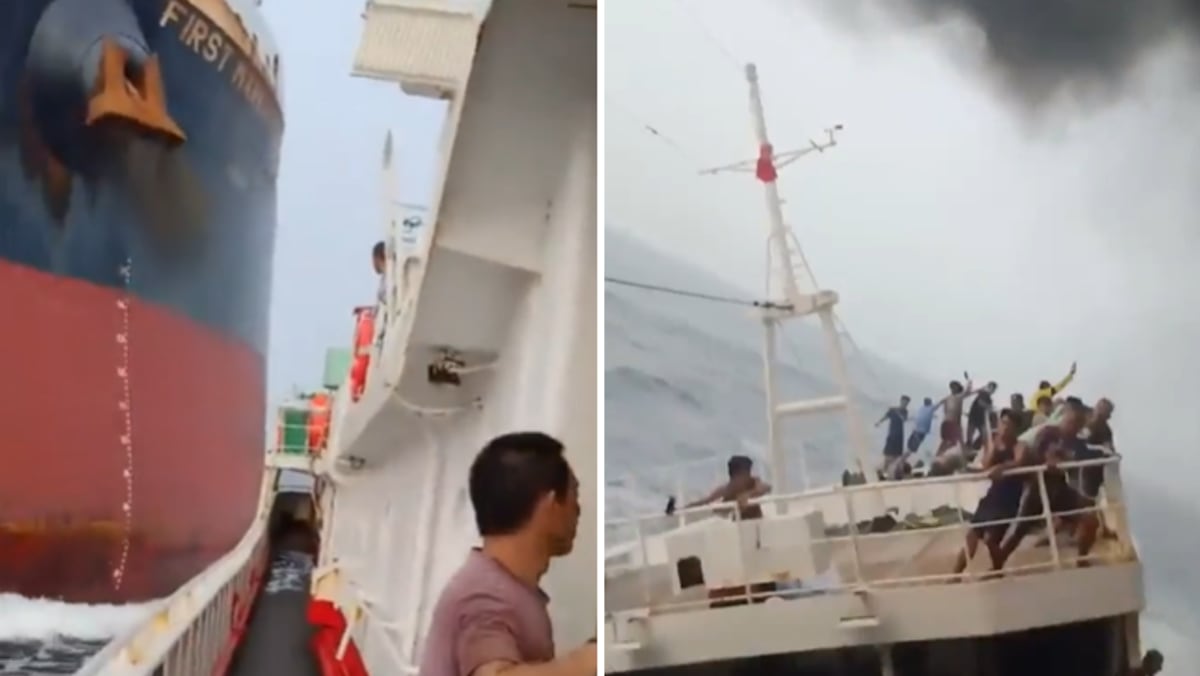
The Maritime and Port Authority of Singapore (MPA) is investigating a collision in the Singapore Strait involving the China-registered fishing vessel Lu Qing Yuan Yu and the Panama-registered bulk carrier First Margaux. The incident, which occurred on September 17, 2026, resulted in the fishing vessel taking on water. Dramatic footage of the collision circulated online. This event is not isolated; Singapore’s maritime authority has a record of investigating such incidents, including a 2017 US Navy collision, the 2024 Dali ship crash that impacted Baltimore, and an engine breakdown on a sister vessel of the Dali in 2025.
These investigations reveal a consistent regulatory response by the MPA, a necessary function for a maritime hub. However, the recurring nature of these incidents, from varied vessel types, suggests a deeper systemic strain. Commercial shipping operates under economic incentives prioritizing speed and volume through major conduits like the Singapore Strait. Fishing operations, by contrast, are dictated by ecological cycles and specific territorial needs. When these distinct operational models intersect in congested shipping lanes, the potential for conflict increases. The collision involving the First Margaux and Lu Qing Yuan Yu highlights this friction.
The global pattern of maritime incidents supports this analysis. The FBI’s criminal probe into the Baltimore bridge collapse in 2024, stemming from the Dali’s collision, points to significant consequences beyond immediate damage. Such events, whether in the Singapore Strait or off the coast of the United States, impose economic costs through disrupted supply chains, increased insurance premiums, and potential port delays. For a country like Thailand, whose economy relies on the efficient flow of goods through these regional arteries, such disruptions represent direct economic vulnerabilities.
While stringent investigations are crucial for accountability, they address symptoms rather than underlying causes. A counterargument would state that navigational errors by vessel crews are isolated human failures. However, the sheer density of traffic, the diverse operational profiles of vessels, and the constant pressure for efficiency in narrow waterways contribute to a complex risk environment. Human judgment, even when highly skilled, operates within systemic constraints.
The trajectory of maritime safety in the Asia-Pacific depends on coordinated, proactive measures. This involves more than identifying fault after an incident. It necessitates revisiting traffic management protocols, fostering better integration between different maritime sectors, and deploying technological advancements for real-time risk mitigation. Without addressing the fundamental tension between growing maritime traffic and the finite capacity of critical waterways, the economic and operational risks for the region, including Thailand, will persist.
Sources
Newsletter
Pacific Daily
A curated briefing from Thailand, Asia-Pacific and the world.