Singapore's Zero-Tolerance Stance Reshapes Regional Maritime Logistics
Recent cannabis interdictions underscore the operational constraints for trans-shipment hubs in Southeast Asia, influencing port viability and illicit trade routes.
SINGAPORE
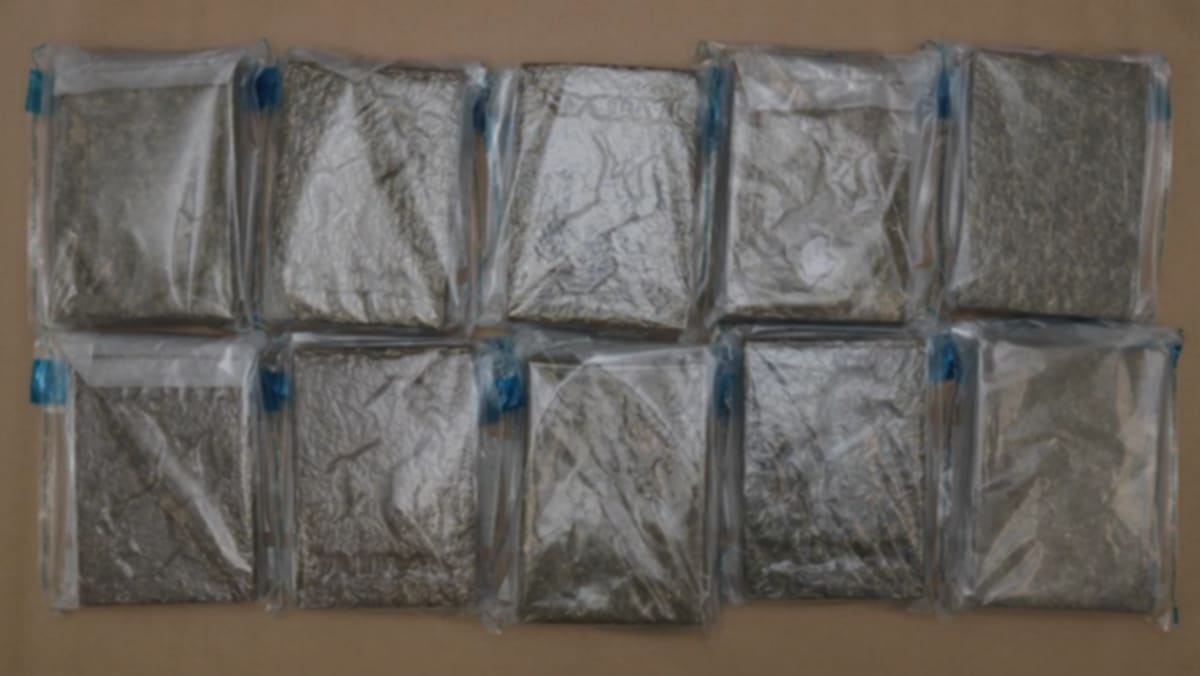
The arrest of a 36-year-old man and a 35-year-old woman for attempting to smuggle over 10kg of cannabis into Singapore, as reported by CNA Lifestyle on 2026-09-18, represents a consistent application of Singapore's drug enforcement policies. This event is not an isolated occurrence but a data point reflecting sustained pressure on Singapore's borders. The consistent enforcement has implications for regional maritime logistics, particularly for nations balancing economic development with stringent drug controls.
Singapore maintains a zero-tolerance policy on illicit substances, a stance that contrasts with evolving legal frameworks in other Southeast Asian territories. While the immediate outcome of such arrests is law enforcement, the broader economic dynamics are complex. Singapore's position as a prominent trans-shipment hub relies on its security and reliability. The Central Narcotics Bureau's capacity to seize over 10kg of cannabis in one operation reinforces its reputation for control. This stringent control, however, also introduces friction into the wider regional supply chain.
For drug traffickers, the severe penalties in Singapore — which can include the death penalty for trafficking more than 500g of cannabis — mean that using the country as a transit point or destination is a high-risk proposition. This incentivizes the use of alternative routes and destinations where enforcement may be perceived as less rigorous or where legal frameworks are more permissive. A seizure of 32kg of cannabis from two women at Phuket airport, reported by The Straits Times, suggests that other regional airports, potentially those with less developed customs and security infrastructure or differing legal priorities, may become alternative waypoints for illicit cargo. The arrest of a Malaysian pair at Singapore’s Woodlands Checkpoint over 'ice' and cannabis smuggling, as reported by Malay Mail, further illustrates persistent attempts to breach Singapore's borders, despite known severe consequences.
For destinations like Thailand, which is exploring more liberal approaches to cannabis cultivation and use, the juxtaposition with Singapore's strict stance creates a set of challenges and opportunities. A more open approach in Thailand could attract new forms of tourism and agricultural investment. Concurrently, it increases the risk of becoming a source or transit country for illicit substances destined for markets with strict prohibitions, such as Singapore or New Zealand. The seizure of over 900,000 doses of meth from a woman arriving in New Zealand from Singapore, reported by VnExpress International, indicates that Singapore, despite its controls, can still be an intermediate point in wider drug trafficking networks, even if not the source.
The core constraint remains the economic calculus of port selection and border control effectiveness. The financial incentives for illicit trade are substantial, driving traffickers to probe perceived weaknesses in enforcement or exploit legal discrepancies across jurisdictions. Singapore's consistent enforcement, exemplified by the cannabis seizure reported on 2026-09-18, acts as a significant deterrent, channeling illicit traffic away from its highly controlled ports and checkpoints. This does not eliminate the trade but rather displaces it. The challenge for other Southeast Asian nations, particularly those with less developed maritime and air logistics security, is to anticipate and counter this displacement effectively. The outcome now depends on whether regional cooperation on interdiction can adapt to these evolving trafficking patterns, or if diverging legal frameworks will inadvertently create new vulnerabilities across the Asia-Pacific maritime landscape.
Sources
Newsletter
Pacific Daily
A curated briefing from Thailand, Asia-Pacific and the world.