Singapore's Unhealthy Air Points to a Deeper Regional Rhythm
The recurrence of unhealthy air quality in Singapore reflects a predictable environmental pattern, challenging marketing narratives and shaping regional perceptions of place.
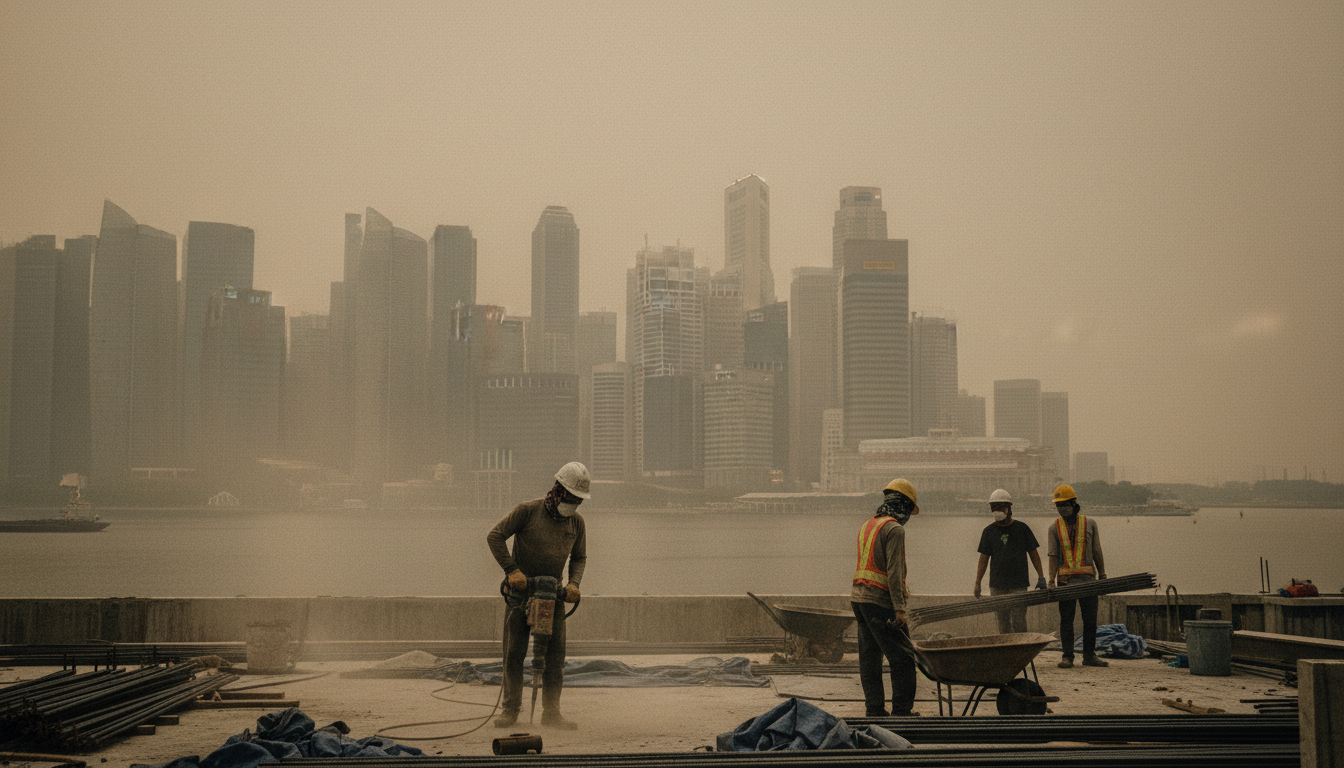
SINGAPORE
On September 28, 2026, Singapore's central, southern, and western regions registered unhealthy air quality, with PSI readings of 108, 105, and 101 respectively, according to CNA Lifestyle. This measurement, taken at 9pm, highlights not an isolated incident but a characteristic aspect of the seasonal cycle that influences the experience of urban environments and regional travel.
The fact sheet indicates that this period in September has seen Singapore's air quality enter and persist in an unhealthy range. Malay Mail, on September 27, 2026, reported that the unhealthy air in Singapore stemmed from continuing fires in Kalimantan. This suggests a pattern where regional environmental factors directly influence local conditions, creating a predictable challenge for urban centers.
The implications of these recurring environmental conditions extend beyond immediate health considerations. While promotional efforts for the region frequently emphasize clear skies and outdoor activities, the consistent presence of haze alters the character of cities. A photograph showing a haze situation over Singapore's Central Business District on September 14, 2026, illustrates how this environmental factor becomes part of the urban landscape. It demands adaptation from residents and a reassessment from potential visitors.
For destinations across Southeast Asia, including Thailand, the integration of such predictable environmental events into the perception of a place becomes a key consideration. The seasonal haze, driven by regional fire activity, is an environmental variable that influences daily life and the broader tourism economy, often in contrast to idealized marketing representations.
The official reports of unhealthy air quality, linked to persistent haze from Kalimantan fires, underscore a deeper interconnectedness within the Asia-Pacific. Prevailing winds carry the smoke across national borders, transforming localized agricultural practices into a regional environmental issue. This phenomenon highlights a dependence on weather patterns and land management practices that transcend national boundaries, making the notion of an unaffected destination increasingly complex.
This recurring pattern of haze, therefore, calls for a perspective that moves beyond immediate news reporting to understand the enduring impact on regional identity. It suggests that the 'season' for travel and urban experience in Southeast Asia is not solely defined by climate but also by these predictable environmental challenges. For Thailand, and indeed the wider Asia-Pacific, such conditions necessitate an honest assessment of how seasonal realities shape both resident quality of life and the allure for destination-seeking travelers. It is a reminder that the environment, far from being a static backdrop, is an active participant in shaping the character of a place, especially when its patterns become predictable.
Sources
Newsletter
Pacific Daily
A curated briefing from Thailand, Asia-Pacific and the world.