Singapore's stage for aspiration in a shifting Asia
K-pop auditions highlight the city-state's role as a regional gateway for global cultural influence.
SINGAPORE
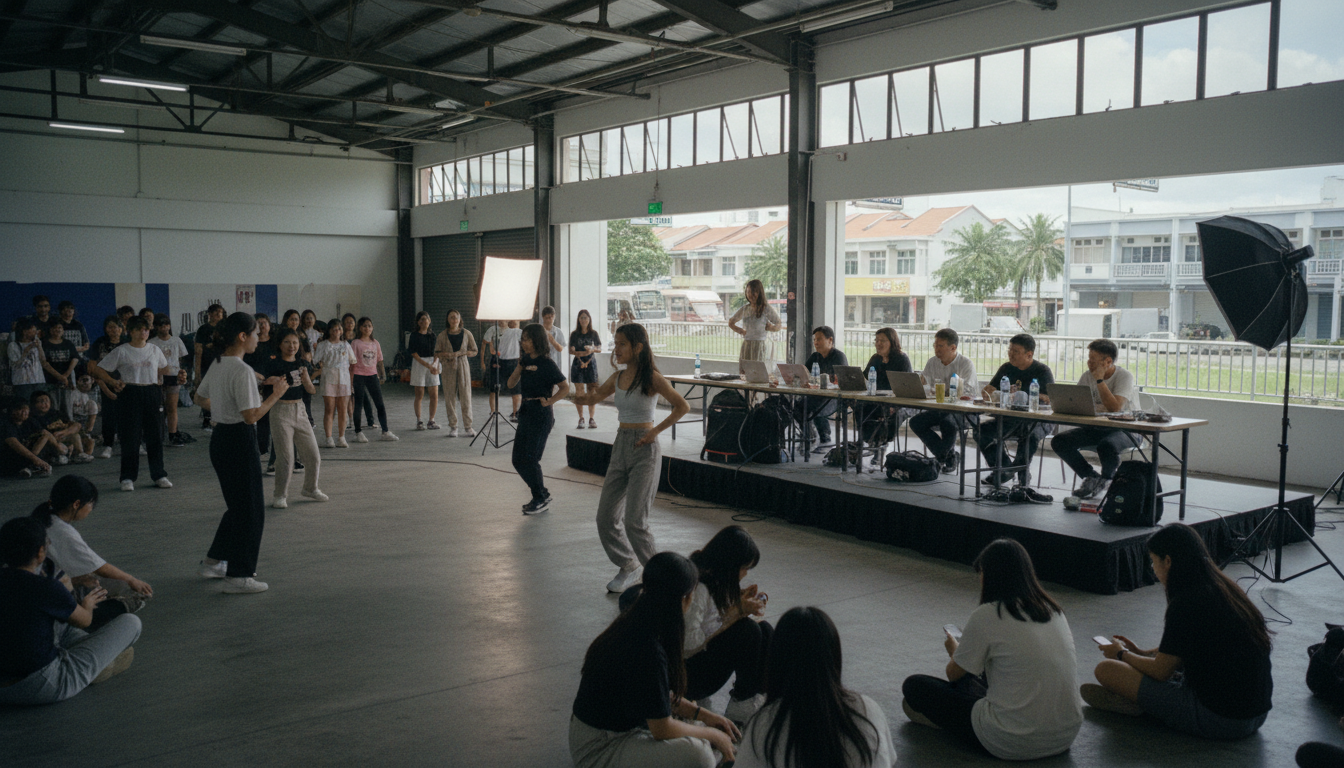
The announcement by BigHit Music, the South Korean label behind BTS, of auditions for new male trainees in Singapore on October 24, 2026, casts the city-state as a specific kind of crucible. It is a place where global cultural currents arrive, are tested, and then potentially amplified across a region. The scene of hopeful teenagers gathering, perhaps even from beyond Singapore’s immediate borders, speaks to an existing infrastructure of aspiration.
This is not a singular event but part of a discernible pattern. The Straits Times reported on global auditions held in Singapore in 2024, noting teens chasing K-pop dreams. A year later, in 2025, a local training academy, SM Universe, saw its pioneer batch of Singapore teens pursuing these same dreams. Singapore appears to serve as a consistent stage for these global cultural enterprises. While the primary objective for BigHit Music is talent acquisition, the choice of Singapore offers a lens into its function within the Asia-Pacific landscape.
Singapore has long cultivated an image as a regional hub for various forms of capital – financial, technological, and now, arguably, cultural. The HashKey interest in acquiring Singapore's Asia Pacific Exchange, as reported by Reuters in 2026, and the appointment of Verena Siow as SAP Regional President for Asia Pacific, noted by SAP News Center in the same year, illustrate this established role in economic and corporate leadership. The K-pop auditions overlay a new dimension onto this established pattern.
Yet, this phenomenon also raises questions about regional equity. While Singapore hosts the auditions, the opportunities generated – for trainees, and subsequently for broader economic and cultural benefits – are largely repatriated to South Korea. The city-state acts as a filter, drawing talent from across the Asia-Pacific, including potentially Thailand, without necessarily retaining the full value of that talent locally. It is a process that centralises opportunity, leveraging Singapore's connectivity and perceived neutrality, but also underscoring the uneven distribution of cultural production power in the region.
The act of aspiring to join a South Korean pop group, facilitated in Singapore, reflects the broader narrative of globalisation in Asia. It posits a future where cultural influence, while seemingly borderless, remains rooted in specific national industries. The young hopefuls who arrive in Singapore are not just chasing a dream; they are participating in a system that defines where that dream can realistically lead, and for whom. The city-state provides the venue, but the script is largely written elsewhere. The question, then, is what other forms of aspiration might find their conduit through this same, strategic geography.
Sources
Newsletter
Pacific Daily
A curated briefing from Thailand, Asia-Pacific and the world.