Singapore's Sport Science Bet: Who Bears the Cost?
While new investment targets athletic performance, the long-term returns for public and private stakeholders remain an open question.
SINGAPORE
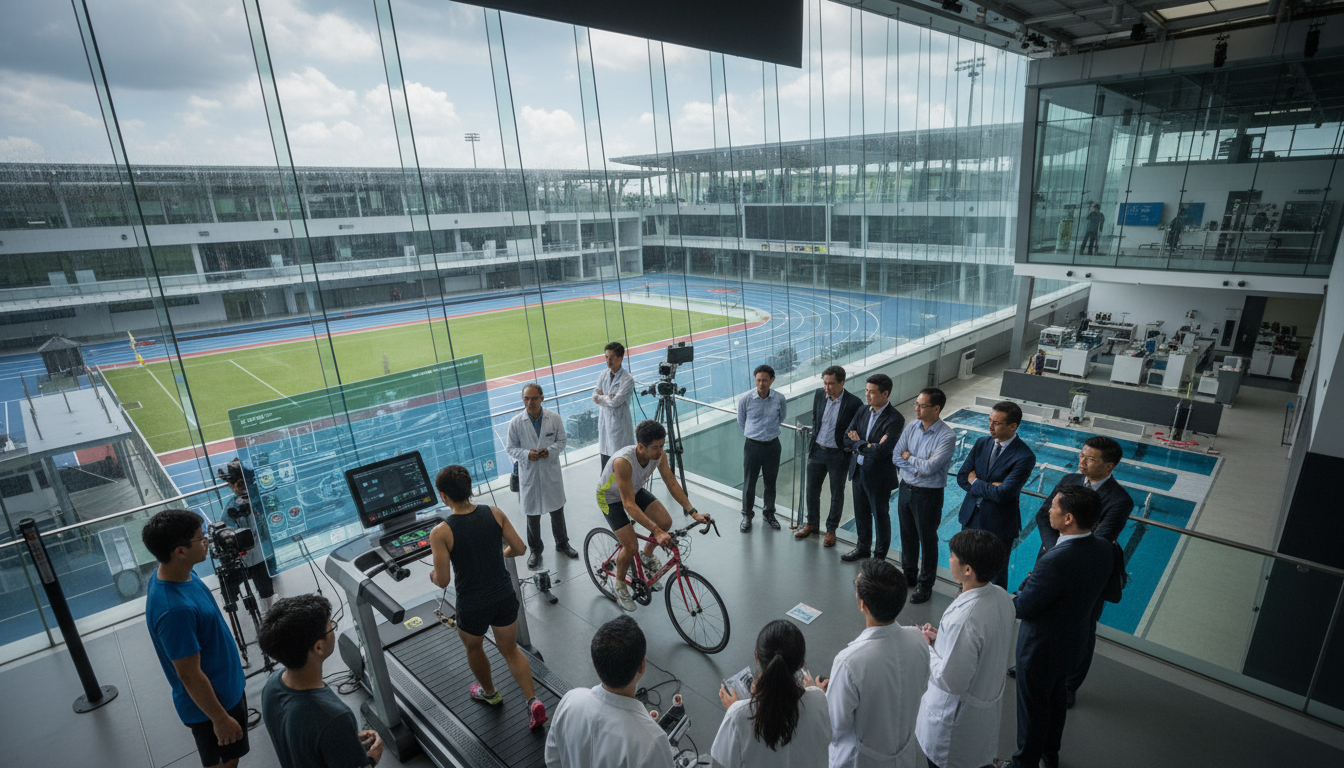
Singapore's recent emphasis on sport science, aiming to provide its elite athletes with a competitive edge, marks a clear strategic direction. The stated goal, reported by CNA Lifestyle on September 14, 2026, involves using data alongside observations from athletes and coaches to inform training and competition decisions. This includes facilities like chambers that simulate varied conditions such as temperature, humidity, and altitude for athlete preparation.
This commitment reflects a broader national focus. A national youth development programme for Singapore basketball was noted by The Straits Times, and National 3x3 basketball head coach Lazar Rasic asserted in The Straits Times on April 10, 2026, that Singapore 'can be world-beaters.' The honorary degree awarded to Paralympic champion Yip Pin Xiu by SMU, as reported by The Straits Times, further underscores a national narrative celebrating sporting achievement.
However, the central tension lies in the economics of this ambition. Sport science, particularly at an elite level, is a resource-intensive endeavor. The question for a market realist is not whether these technologies can improve performance – the premise is that they can – but rather, who bears the cost and what tangible return on investment is expected by the various contributors? Public funding, channeled through government bodies or educational institutions, underwrites much of this infrastructure. The direct benefit is often framed as national pride or improved health outcomes, which are difficult to quantify in traditional financial terms. The indirect benefits, such as inspiring future generations or elevating Singapore's global standing, also lack immediate financial metrics.
For private sector involvement, the incentive structure typically requires more direct financial returns, whether through sponsorship, intellectual property commercialization, or increased consumption linked to sporting success. Without a clear pathway for these returns, private investment may remain limited or concentrated only in sports with established commercial appeal. The current discourse, while highlighting technological advancements and national aspirations, offers limited insight into the financial models sustaining this significant investment over time.
The Operational Challenge
Implementing advanced sport science requires not only capital outlay but also a deep bench of skilled professionals. The integration of data, observations, and high-tech simulation demands expertise in diverse fields, from sports physiology to data analytics. The operational efficiency and effectiveness of these programmes will ultimately dictate whether the investment translates into the 'competitive edge' described. This edge is not merely about having the technology but about its intelligent application. If the stated aim is to help athletes and coaches make 'more informed decisions,' the efficacy of that information flow and its practical adoption become critical.
A Wider Asia-Pacific Context
While Singapore makes these focused investments, the broader Asia-Pacific region presents a varied landscape. Other nations might consider similar strategies, but their capacity to invest at this level, or to attract the necessary talent, will differ. The Singaporean model, driven by significant public resources and a compact, structured sporting ecosystem, may not be directly replicable. Its success, therefore, cannot be automatically assumed to translate into a blueprint for the entire region.
The real test for Singapore's sport science initiative will be its ability to consistently produce athletes capable of sustained international success, and to articulate the value proposition for the significant resources deployed. The outcome now depends on whether the projected performance gains justify the ongoing capital and operational expenditures, a calculation that extends beyond national pride into fiscal responsibility.
Sources
Newsletter
Pacific Daily
A curated briefing from Thailand, Asia-Pacific and the world.