Singapore's Football Surge: Beyond the Standings, a Question of Depth
The expansion of Jalan Besar Stadium follows a dramatic increase in financial contributions, raising questions about the nature of public enthusiasm and private investment in national spectacles.
SINGAPORE
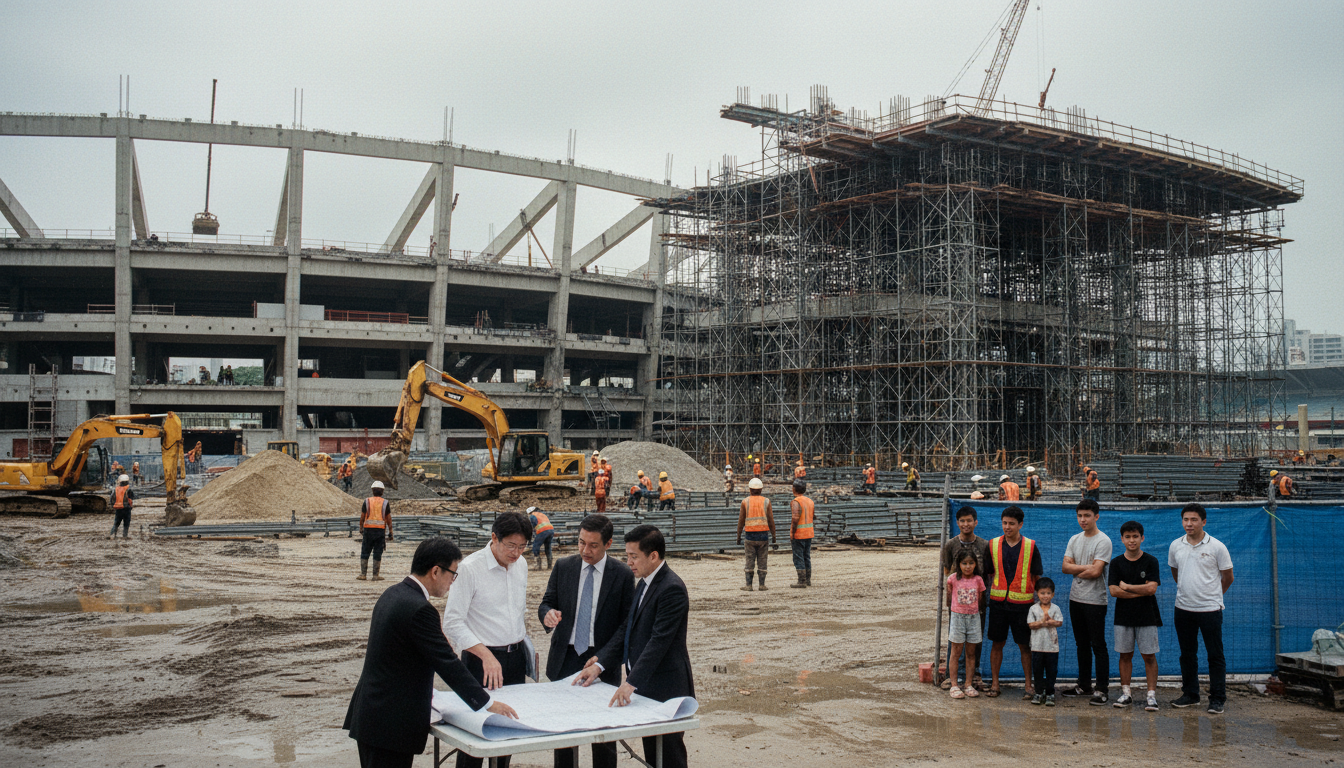
Dusk falls over Jalan Besar Stadium on August 7, 2026, before a match between Singapore and Indonesia. The image captures a momentary quiet, a pause before an anticipated energy, but it also suggests something larger than the immediate contest. The decision to add 1,500 seats to the stadium, a response by the Football Association of Singapore (FAS) to what it describes as stronger fan support, frames a narrative that extends beyond the touchlines.
Financial contributions to the FAS surged from S$695,000 to S$12.35 million. A significant portion, S$10 million, originated from the tech firm Sea. This infusion of capital transforms what might appear as a local sporting interest into a broader economic and cultural phenomenon. The expansion of a sporting venue, following substantial corporate contributions, indicates a recalculation of value, where the intangible benefits of community engagement and national identity increasingly draw investment.
However, the narrative of fan support and corporate philanthropy invites closer examination. The FAS describes a growth in fan support. Corporate donations, while impactful, are not always perennial, and their motivations can be multifaceted, extending beyond pure altruism. The scale of Sea's contribution could be viewed not merely as a response to fan enthusiasm but as a strategic alignment, a form of civic engagement that positions a large tech entity within the fabric of national sentiment. In this perspective, the stadium expansion is not just a building project; it is a cultural artifact, reflecting a society grappling with how to channel private wealth into public goods, and how to articulate national identity through shared spectacles.
What this asks of those who arrive at the stadium, and indeed, of the broader public, is a willingness to invest, both emotionally and financially, in a collective endeavor. The physical act of increasing seating capacity translates into an expectation of greater attendance, a larger communion. Yet, the question remains: is this support organic, a genuine reflection of widespread public interest, or is it partly cultivated, a product of targeted corporate and associational efforts? The announced expansion precedes a clearer, independently verifiable trend of sustained ticket sales and fan engagement metrics. The current data points to a sudden, dramatic increase in donations, rather than a gradual, long-term growth in active supporters at games.
For the Asia-Pacific region, Singapore’s experience offers a specific case study. Football, globally, often serves as a proxy for national aspirations and societal cohesion. When a nation's football body receives a sudden, significant financial boost and responds with infrastructure expansion, it suggests a strategic pivot. It implies that national identity, previously expressed through diverse channels, might now be finding a more pronounced outlet in collective sporting events. The region, with its diverse array of nation-states and rapidly developing economies, frequently seeks cultural anchors in a shifting global landscape. Investment in public spectacle, particularly one that mobilizes large segments of the population, could be seen as one such anchor.
The challenge, then, lies in discerning the true depth of this transformation. Is the increased stadium capacity a sign of a burgeoning, resilient fan base, or a calculated investment in the idea of one? The picture of Jalan Besar Stadium at dusk, before the crowds arrive, holds this tension. It represents both potential and projection, a site where national pride and corporate strategy converge. The question for Singapore, and perhaps for others observing, is whether the roar of the crowd will ultimately fill the new seats, echoing a sustained passion, or if the edifice will stand as a symbol of aspiration, still awaiting its full popular embrace. The stadium, in its expanded form, will require more than just a passing interest; it will demand a consistent presence, a commitment from the very people it is meant to serve.
Sources
Newsletter
Pacific Daily
A curated briefing from Thailand, Asia-Pacific and the world.