Singapore Pilots Education Reform: Cost, Scale, and the Asia-Pacific Question
Singapore's Ministry of Education embarks on a pilot program for smaller classes and streamlined teacher duties. The central tension remains: how will these optimizations be financed, and who bears the cost across the region?
SINGAPORE
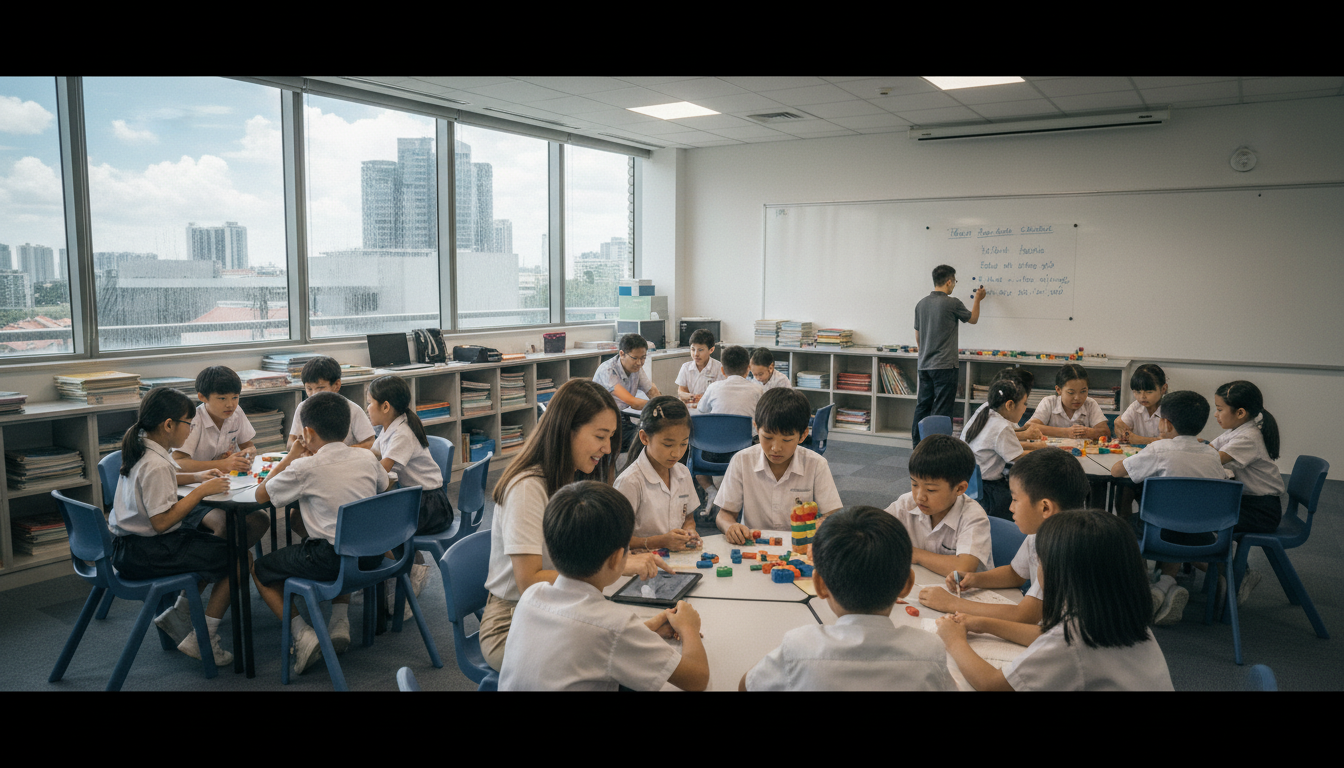
Singapore's Ministry of Education (MOE) will pilot smaller classes and streamlined teacher duties in six schools. Education Minister Desmond Lee, speaking on September 16, 2026, at the MOE workplan seminar, stated that the ministry will explore where smaller classes can make "the greatest difference" to teaching and learning. This initiative focuses on specific areas of educational improvement, acknowledging the operational complexities involved.
Reducing class sizes implies an increase in required resources. Maintaining educational standards with fewer students per class necessitates additional teachers, more classroom space, or both. For a pilot program restricted to six schools, these resource demands are contained, allowing for data collection on efficacy without imposing system-wide strain. However, scaling such an initiative across Singapore's entire education system, or for other nations in the Asia-Pacific region, would require a substantial increase in recurrent expenditure for staffing and infrastructure. This creates a clear tension between the aspiration for improved learning environments and the pragmatic limits of budget and human resources.
Simultaneously addressing teacher duties acknowledges a persistent challenge in education systems: teacher workload. Reports have previously indicated that teachers face being overworked, highlighting a systemic pressure point. Efforts to automate administrative tasks have been a focus for several years. The Straits Times reported in 2017 that more than 400 pre-schools were to adopt IT solutions to streamline administrative work. Similarly, the World Bank noted in 2021 how an education operation in Bihar, India, inspired online application and admission systems. Such technological interventions are intended to alleviate administrative burdens, theoretically allowing teachers to focus more on instructional roles. The MOE pilot's inclusion of 'streamlined duties' recognizes that non-teaching responsibilities can divert time and energy from core educational activities.
The MOE's methodical approach is notable, but the impact of smaller classes is not universally conclusive across all contexts or student demographics. The pilot’s success will hinge on its ability to identify the precise areas where smaller classes yield the most significant educational impact. While streamlining duties may reduce teacher stress, it does not guarantee improved learning outcomes if the fundamental issue lies in pedagogical effectiveness rather than administrative overhead. These measures aim to optimize educational inputs, but the ultimate output – learning – is influenced by a complex set of factors, including curriculum design, teacher training quality, and student engagement.
For countries like Thailand and others in the Asia-Pacific facing similar educational reform challenges, Singapore's pilot offers a valuable case study. The critical question for finance ministries and education planners will be the return on investment: at what cost per student does a marginal improvement in learning become financially justifiable? The pilot's findings regarding "the greatest difference" will therefore serve not just as educational insights but as economic indicators, shaping decisions on who pays, and how much, for the next phase of educational improvement.
Sources
Newsletter
Pacific Daily
A curated briefing from Thailand, Asia-Pacific and the world.