Post Malone's Postponed Concert: A Lens on Singapore's Entertainment Ambition
The abrupt cancellation of a high-profile music event invites questions about the realities of a regional 'Wembley' and the experience of its visitors.
SINGAPORE
The announcement on Thursday (Aug 27) by Ticketmaster Singapore that Post Malone's concert has been postponed leaves thousands of ticketholders with full refunds, and a distinct absence in their calendars. The news, reported by CNA Lifestyle, is a simple factual statement of an event’s cancellation. But for those arriving in Singapore with plans built around such a draw, it signals a more complex reality.
Singapore has positioned itself with stated aims of becoming the 'Wembley' of the region, according to The Straits Times in May 2026, explicitly looking to host more blockbuster events. The intention is clear: to draw significant cultural and economic activity. Such aspirations are met by the expectation that these events will proceed as planned, a foundational trust for any visitor planning an international trip. The postponement of an event by an artist of Post Malone’s stature, even when ticket refunds are offered, disrupts this trust. It represents a tangible point of friction for attendees who have committed not just ticket money, but also travel arrangements, time, and anticipation to experience a specific moment in a specific place.
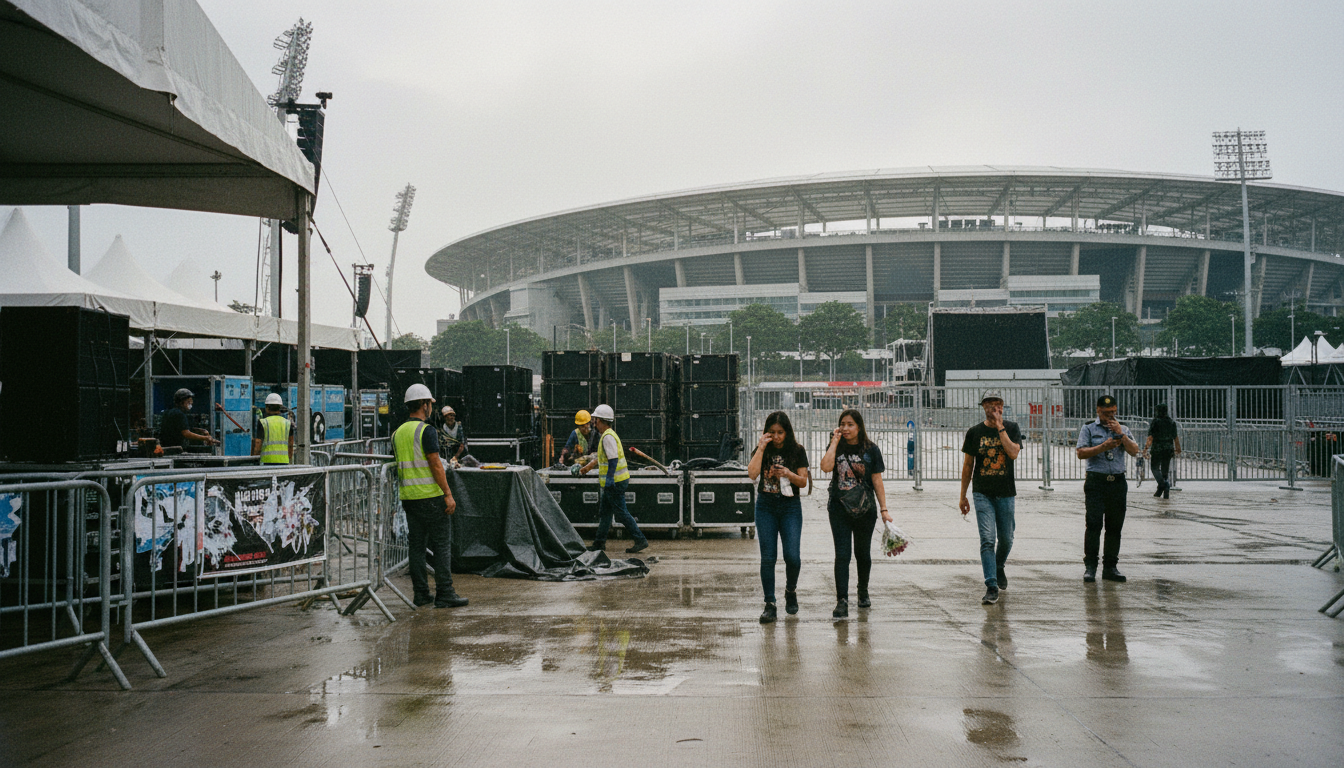
The Kallang precinct, intended to be a hub for these 'blockbuster events,' relies on a steady stream of successfully executed entertainment to build its reputation. When an event is called off, the physical infrastructure of the venue stands, but its purpose is momentarily diminished. The capital and logistical commitments from entities like Visa Singapore, which focuses on powering payments, underpin an ecosystem designed for high-volume transactions and seamless experiences. A cancellation, therefore, ripples beyond the immediate ticket sale, affecting the wider ecosystem that anticipates and supports these gatherings. It introduces a note of uncertainty into the narrative of Singapore as a reliable entertainment destination.
While the focus often remains on economic metrics—impact investing and funding gaps in Asia, as noted by The Business Times in December 2025—the experience of the individual visitor offers a crucial counterpoint. The ‘Wembley’ ambition implies a destination that is not only capable but also dependable. The postponement, even if an isolated incident, asks whether the city’s capacity to host is fully matched by the consistency of its event delivery. For those who planned to attend, Singapore asked them to commit time and resources, and the postponement now asks them to reconsider those commitments.
The simple act of a concert being postponed brings into focus the delicate balance between ambition and execution in the competitive landscape of regional entertainment. The question that remains is not whether Singapore can attract high-profile acts, but whether it can consistently deliver on the promise inherent in their announcement. The sight of an empty venue, even temporarily, is a stark reminder of the difference between an announced event and a realized experience.
Sources
Newsletter
Pacific Daily
A curated briefing from Thailand, Asia-Pacific and the world.