PNG Human Trafficking Incident Points to Broader Regional Vulnerabilities
The rescue of Indonesian nationals in Port Moresby underscores how persistent instability in West Papua creates a susceptible population for criminal networks operating across national borders.
SINGAPORE
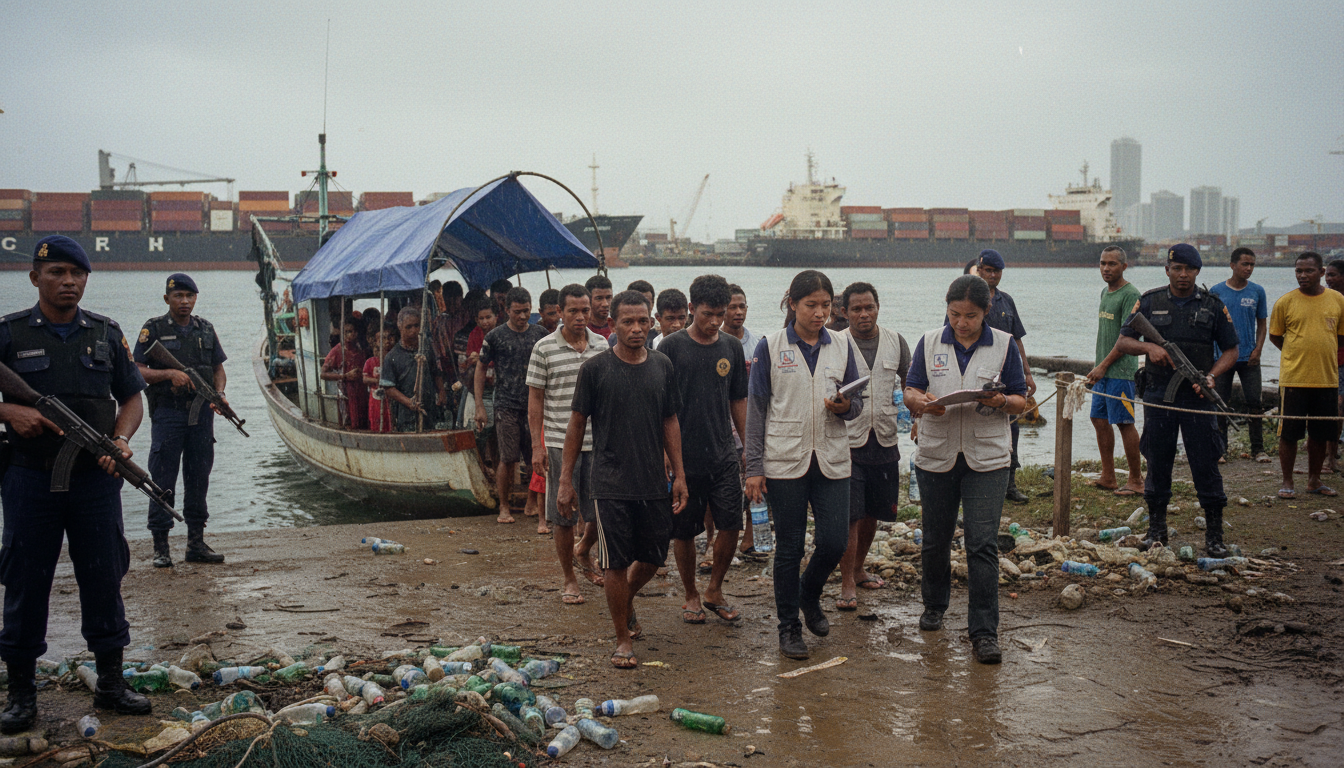
The Royal Papua New Guinea Constabulary’s rescue of 39 Indonesian nationals from an alleged human trafficking operation in Port Moresby, reported on September 22, 2026, reveals a pattern of regional vulnerability that extends beyond the immediate incident. Four Chinese nationals were detained in connection with the operation, which reportedly used false employment offers via social media to lure 34 men and five women. The victims were confined in a three-bedroom property in downtown Port Moresby, according to police.
This event, while focused on Papua New Guinea’s law enforcement response, highlights a critical, often overlooked aspect of human trafficking in the Asia-Pacific: the exploitation of populations from regions marked by protracted conflict and limited economic opportunity. The 39 individuals rescued were Indonesian, and the proximity of Papua New Guinea to Indonesia’s West Papua region is geographically significant. West Papua has experienced sustained internal conflict, characterized by actions of the Free Papua Movement and responses from Indonesian authorities, as reported by The New York Times in 2021 and The Guardian in 2019. Reports from BBC in 2019 and 2023 detail instances ranging from Indonesian police using snakes to intimidate a Papuan man to a New Zealand pilot’s kidnapping amidst the conflict. This environment of instability and rights concerns, even when acknowledged by figures like President Jokowi regarding past human rights violations in 2023, can create a population susceptible to false promises of employment and better prospects.
Criminal networks frequently exploit such conditions, leveraging the desperation of individuals seeking to escape hardship. The offer of employment, disseminated through social media, serves as a common tactic to ensnare victims. The specifics of the trafficking operation – the confinement in a residential property and the involvement of individuals from a third country, China – illustrate the transnational and opportunistic nature of these crimes. It also indicates that Papua New Guinea, as a sovereign state within this complex geography, is not merely a transit point but a site of direct exploitation.
However, focusing solely on the internal dynamics of West Papua as the primary driver risks oversimplifying a multifaceted issue. While the conflict clearly contributes to vulnerability, the broader economic disparities across the Asia-Pacific also play a significant role. The allure of employment, even false, can transcend specific regional conflicts when stark economic differences exist between sending and receiving locations. The involvement of Chinese nationals as alleged perpetrators suggests a wider operational reach, moving beyond immediate bilateral dynamics. The RPNGC Transnational Crime Directorate's role in developing the intelligence underscores the necessity of specialized units to address these cross-border challenges.
The response by the Royal Papua New Guinea Constabulary marks a specific action against a known criminal enterprise. Yet, the underlying factors that render populations vulnerable, particularly those from historically marginalized or conflict-affected territories like West Papua, remain largely unaddressed across the region. The continued existence of such trafficking operations suggests that while law enforcement can react to specific incidents, the deeper structural conditions enabling these crimes persist, creating an enduring challenge for regional stability and human security.
Sources
Newsletter
Pacific Daily
A curated briefing from Thailand, Asia-Pacific and the world.