Plus44 x Jahan Loh: Apparel Design Navigates Symbolic Function
Lewis Hamilton’s lifestyle brand collaborates with Singaporean artist Jahan Loh, weaving F1 themes with migration metaphors. The practical utility of such high-concept streetwear, especially in Singapore's climate, warrants consideration.
SINGAPORE
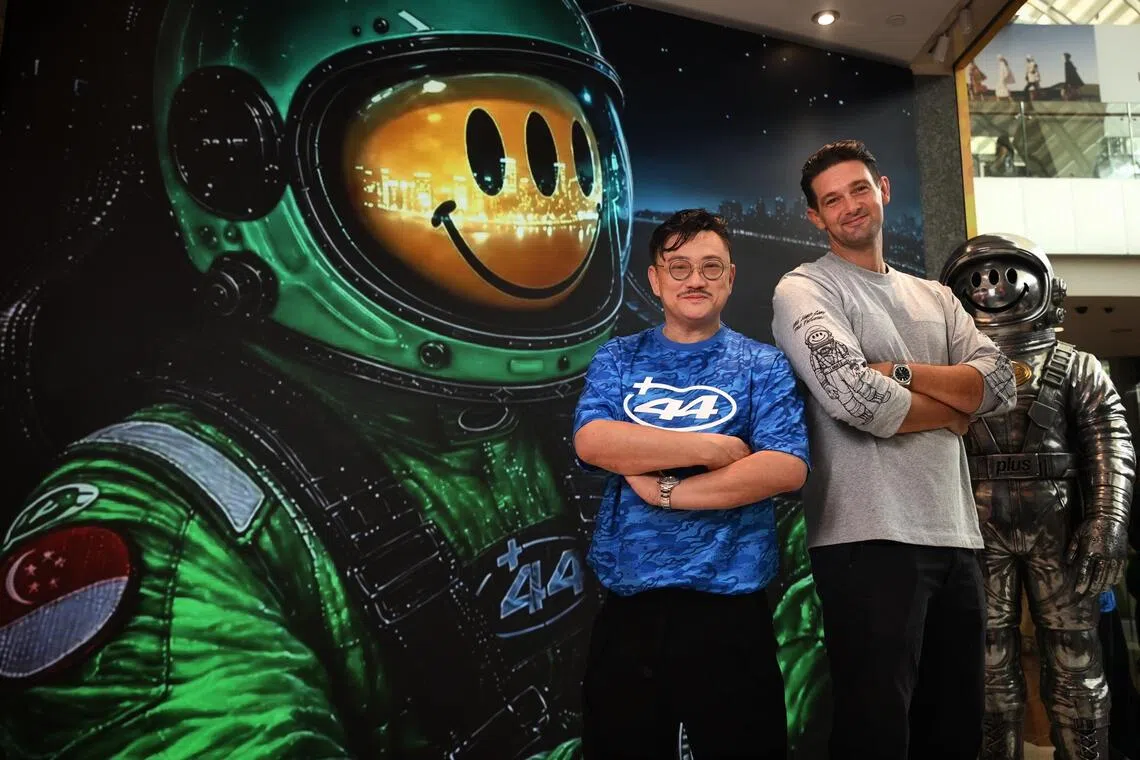
The collaboration between Lewis Hamilton’s lifestyle brand Plus44 and Singaporean artist Jahan Loh, revealed on October 5 at Marina Bay Sands, presents a streetwear collection. This line, named “Plus44 Marina Spaceport,” marks Plus44’s initial entry into South-east Asia and its first partnership with a Singaporean artist. The collection integrates spacemen graphics and camouflage prints, which are reported to be inspired by F1 car emissions.
Jahan Loh interprets spacemen as symbols for migration and identity. He connects the intensity of Formula One racing to the demands of spaceflight. His perspective extends to a future where spaceships are common. This conceptual framework underpins the collection, aiming to imbue graphic apparel with a meaning related to human movement and personal evolution.
Apparel design often faces challenges when drawing inspiration from high-performance contexts like Formula One. The visual elements of speed, advanced machinery, and extreme conditions must translate into clothing that remains practical for daily use. While the idea of F1 car emissions informing camouflage patterns provides a specific design detail, the actual effectiveness of such a print on apparel for general consumption requires scrutiny. Camouflage, in its original form, serves a distinct functional purpose. Its application to streetwear typically shifts its role to purely aesthetic, detaching it from its practical origins.
Similarly, Loh’s articulation of spacemen as metaphors for migration and identity carries conceptual depth. Yet, a question arises regarding whether this narrative translates into clothing that genuinely supports the lives of its wearers beyond a stylistic statement. High-concept designs, while thought-provoking, can sometimes overlook the pragmatic requirements of garments. Do these spacemen graphics or emission-inspired camouflages offer comfort, durability, or adaptability that aligns with a user’s environment and daily activities?
Lewis Hamilton, a prominent figure in Formula One, has extended his brand into an area where utility frequently determines appreciation. While his racing career provides a platform for ventures like this, the enduring success of lifestyle apparel relies on more than celebrity endorsement or abstract themes. It depends on whether the garment performs for its users, particularly in environments like Singapore’s tropical humidity. Material selection, ventilation, and garment cut are crucial considerations in such a climate.
The collection’s launch at Marina Bay Sands, a notable commercial hub, suggests a market-focused strategy. However, the true measure for any design collaboration is its capacity to integrate conceptual depth with tangible wearability. Apparel is fundamentally a tool. It offers protection, insulation, and facilitates movement. When design prioritizes symbolic representation above these core functions, it risks becoming an object of display rather than a practical extension of the wearer’s identity. The ambition to link Formula One intensity to spaceflight and migration is considerable. The challenge remains in ensuring the clothing itself functions as effectively as the concepts it aims to represent.
Sources
Newsletter
Pacific Daily
A curated briefing from Thailand, Asia-Pacific and the world.