North-South Corridor Delays Reveal Operational Limits in Singapore's Urban Core
Unexpected ground conditions prolong infrastructure projects, stressing existing networks until at least 2029.
SINGAPORE
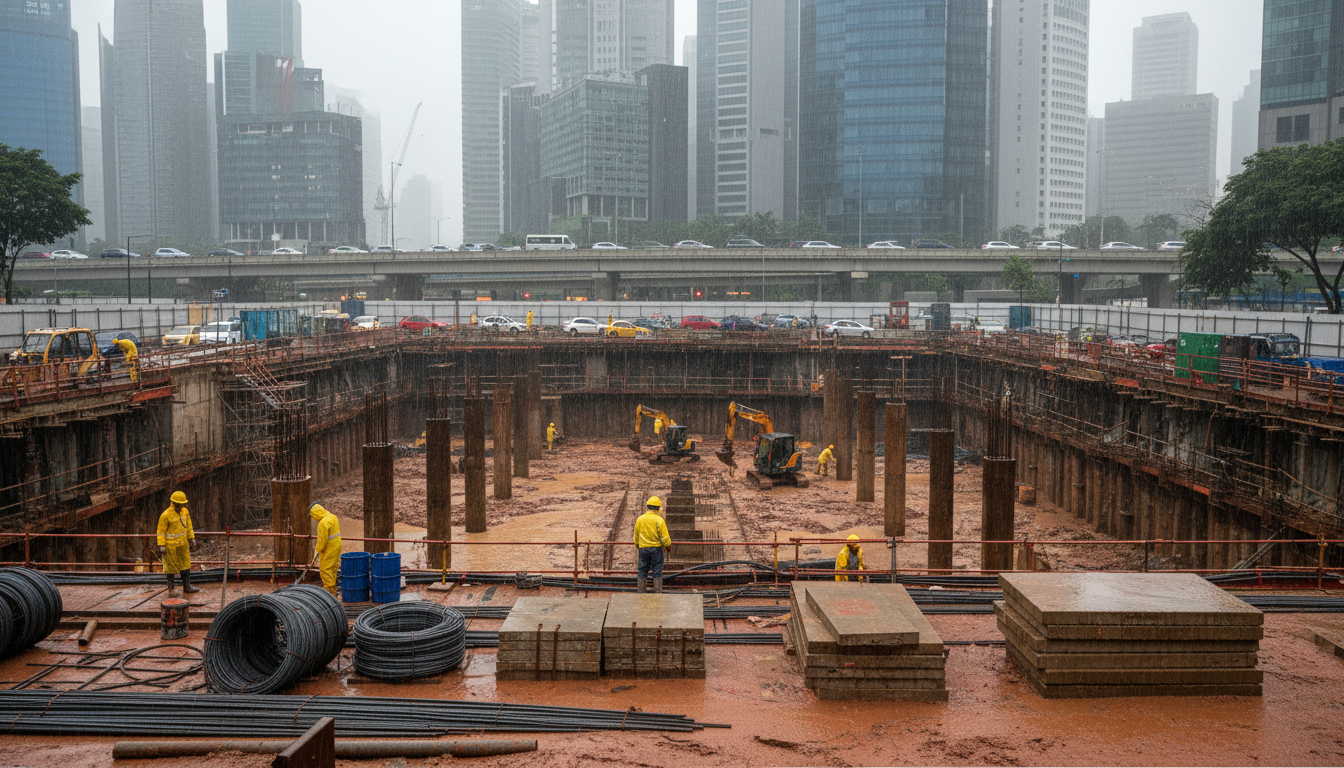
Singapore's Land Transport Authority (LTA) has announced a two-year delay for the North-South Corridor (NSC), with phased openings now projected from 2029. This adjustment stems from what the LTA describes as unexpectedly challenging ground conditions, necessitating more complex construction methods. The NSC, a 21.5 km transport artery, was initially slated for completion in 2027. The project's construction site at Novena was observed on September 15, 2026.
This delay for a major urban infrastructure project highlights the operational vulnerabilities inherent in dense urban development. Even with extensive geological surveys, the actual subsurface can present unforeseen complexities like hard rocks and water seepage, as flagged by the LTA. Such conditions not only slow progress but also demand reassessment of engineering approaches, directly impacting resource allocation and project timelines. The LTA had previously stated that NSC construction was entering its 'most challenging phase' in early September 2026, a forecast that has now materialized into a two-year setback.
The implication for Singapore's existing transport infrastructure is immediate and significant. The NSC is designed to alleviate congestion on expressways and arterial roads, integrating bus lanes, cycling paths, and pedestrian walkways. With its completion pushed back, the burden on the current road network and public transport systems will persist longer than planned. This sustained pressure could lead to increased maintenance demands on existing infrastructure, potentially accelerating wear and tear, and requiring further investment to maintain operational integrity until the NSC can deliver its intended relief. The delay effectively postpones the operational efficiencies and capacity gains that the NSC is meant to provide.
A counterargument might suggest that such delays are a standard component of large-scale infrastructure projects, especially those involving extensive underground work in a geologically complex environment. Proponents of this view could argue that a two-year adjustment over a multi-decade project lifecycle is within an acceptable margin, prioritizing safety and structural integrity over adherence to initial timelines. The LTA's emphasis on "more complex construction methods" implies a response calibrated to these conditions, rather than a fundamental failure of planning. However, the operational strain on existing systems during this extended period remains a tangible cost.
The real test will be how Singapore's transport network performs under prolonged stress until at least 2029. The initial completion target of 2027 has been pushed to a phased opening from 2029, meaning the full operational benefit will arrive even later. The continued reliance on current infrastructure means any existing bottlenecks will worsen before they improve. This revised timeline underscores the inherent difficulty in forecasting subterranean conditions and its cascading effect on urban functionality. The outcome now depends on the resilience of the current network to absorb this extended demand.
Sources
Newsletter
Pacific Daily
A curated briefing from Thailand, Asia-Pacific and the world.