Military Exercises in Mexico Highlight Operational Stress for Pacific Rim Nations
A recent deployment of U.S. troops to Chihuahua for joint combat training, while geographically distant, illuminates unaddressed operational realities for nations across the Pacific Rim. Such movements invariably strain existing logistical frameworks and demand a reassessment of what 'readiness' truly entails.
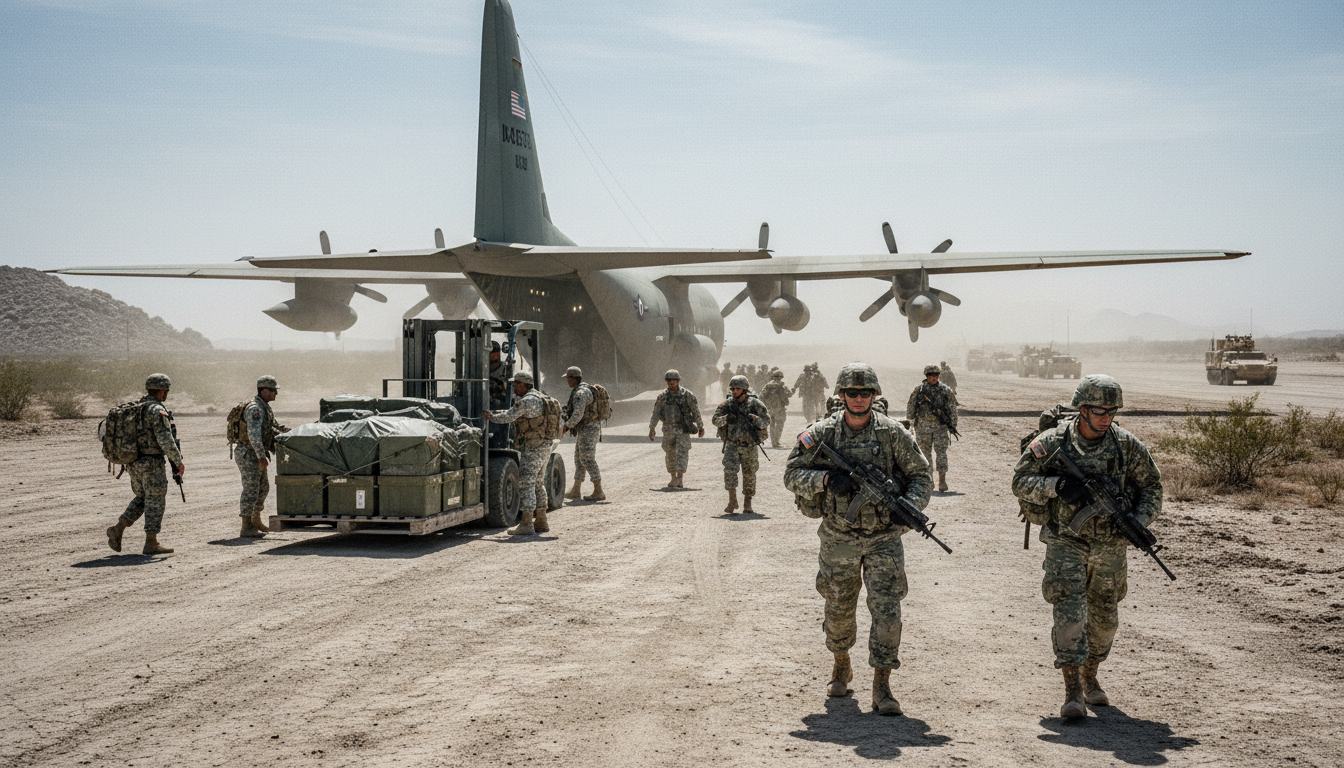
The Mexican Senate on Monday granted President Claudia Sheinbaum the authority to allow 139 U.S. Army troops to enter Chihuahua for joint training exercises. These exercises, scheduled to begin this Sunday at Santa Gertrudis Air Force Base, include the simulated destruction of sniper positions, the seizure of an airfield, an air assault, the destruction of a fuel-supply point, and the capture and extraction of a target using live fire. This deployment offers a precise, if geographically remote, case study into specific operational demands within Mexico’s security landscape. However, the event implicitly raises questions for other Pacific Rim nations, including Thailand, about their own capacities to absorb and integrate similar movements or respond to crises necessitating such deployments.
The act of clearing 139 U.S. troops for entry is a political decision. Yet, the practical implications extend beyond political endorsement. Any troop movement of this scale requires pre-existing infrastructure, detailed coordination protocols, and sufficient base capacities to accommodate personnel, equipment, and live-fire exercises. The activities stipulated — air assault and target capture/extraction with live fire — place distinct demands on air traffic control, ground logistics, medical support, and communication networks. The immediate evidence from Mexico News Daily focuses on the execution of these combat exercises.
While the specific context for this deployment includes reported security-related tension in the Mexico-U.S. relationship, particularly regarding the CIA’s alleged participation in a drug lab raid in Chihuahua, an operational lens reveals a different set of considerations. The question is not simply why these troops are present, but how their presence is managed without disrupting civil or military infrastructure. The exercise simulates high-intensity scenarios, meaning operational systems must sustain periods of elevated activity. For a structural analyst, the key concern is identifying which components of the system — transport, housing, maintenance, or communication — are least resilient to sustained pressure or sudden spikes in demand.
Countries like Thailand, situated within the Pacific Rim, regularly participate in multinational exercises. However, the scale and complexity of operations, especially those involving live-fire and air assaults, stress operational limits. A nation’s ability to host and execute such maneuvers is a direct measure of its internal resilience and its capacity to coordinate external forces. The stated purpose of these exercises in Chihuahua — the destruction of a fuel-supply point — underscores the need for robust environmental and safety protocols, which can quickly become points of failure under operational stress.
Some suggest that the presence of U.S. forces inherently brings its own logistical support, alleviating the burden on the host nation. However, even with external support, the integration points remain critical. Joint operations necessitate shared understanding of command structures, interoperability of equipment, and common communication channels. Friction points frequently arise at these interfaces. A lack of standardized procedures or insufficient local capacity to absorb unexpected resource drains can lead to operational delays or, in extreme cases, mission failure.
The long-term implication for Pacific Rim nations is the necessity of critically assessing their own operational readiness. While discourse has often focused on economic integration, as evidenced by various trade discussions, military interoperability and logistical resilience remain a foundational, if less publicized, aspect of regional stability. The ability to handle unexpected or intensified military presence without internal operational breakdown is a benchmark of true preparedness. This preparedness often depends on the state of local infrastructure and the availability of trained personnel. The unresolved constraint for many nations is the consistent investment required to maintain these operational capacities in quiescent periods, particularly given competing budgetary demands. The outcome now depends on whether regional governments prioritize internal operational robustness as highly as diplomatic engagements.
Sources
Newsletter
Pacific Daily
A curated briefing from Thailand, Asia-Pacific and the world.