Mexico's Export Model Offers Lessons for Asia-Pacific Value Chains
While Mexican exports show explosive growth, the domestic value added within them reveals a persistent challenge for nations prioritizing raw volume over integrated production.
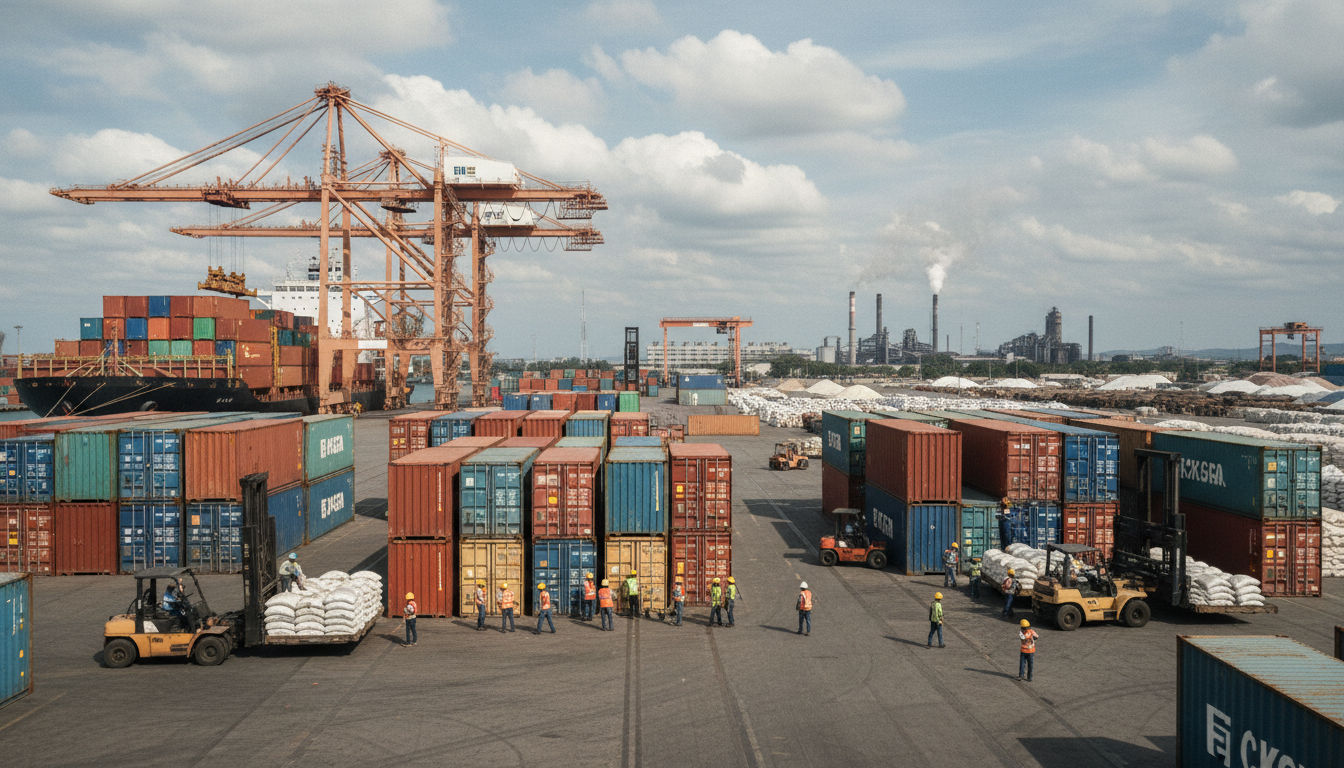
Mexican exports are experiencing significant expansion. However, the reported aggregate value of these exports does not directly reflect the country's generated value within these products. A car exported from Mexico, for example, can include engines and transmissions from the United States, steel and aluminum from Canada, and electronic components from Asia, according to México ¿cómo vamos?, a Mexico City-based think tank, in an article published last month. This structure means that a substantial portion of the declared export value bypasses the domestic economy.
This dynamic highlights a fundamental tension: nations can increase gross export figures through assembly operations that add minimal local value, or they can pursue a strategy of deeper integration and domestic content generation. México ¿cómo vamos? points out that the National Institute of Statistics and Geography (INEGI) tracks domestic value added in Mexican exports, an indicator that offers a more precise measure of economic contribution than raw trade volume. The distinction is critical for understanding true economic impact.
For Thailand and other Asia-Pacific economies, Mexico's experience offers a cautionary signal. Many economies in the region prioritize export-led growth, often attracting foreign direct investment (FDI) into manufacturing and assembly. The incentive for foreign firms is often access to lower labor costs or strategic trade agreements, allowing them to leverage the host country as a production base without necessarily fostering deep domestic integration of their supply chains. This can result in impressive export statistics that mask limited local economic benefit and perpetuate a reliance on imported intermediate goods.
Bloomberg.com reported in May that political decisions are pushing Mexico's export profile back to lower value goods. This suggests that without deliberate policy intervention, the natural tendency might be towards simpler, less integrated production unless there are strong incentives for domestic content. While Mexico's total trade with the U.S. is projected by Statista to be substantial in 2025, and specific commodities like avocado and tequila exports show rising values and volumes respectively, these represent only segments of the broader export landscape.
The challenge for Asia-Pacific nations lies in shifting from merely being a waypoint in global supply chains to becoming a source of higher domestic value. This requires sustained investment in local capabilities, technology transfer, and policies that encourage local sourcing and R&D. Without such strategic shifts, the growth of export volumes might primarily benefit external economies, leaving the host nation to bear the infrastructure costs and environmental burdens of manufacturing without capturing a proportionate share of the economic value. The outcome will depend on whether policymakers prioritize the depth of economic integration over the simple breadth of export figures.
Sources
Newsletter
Pacific Daily
A curated briefing from Thailand, Asia-Pacific and the world.