Mexico's Cry of Independence: A Broadened Identity and Pacific Horizons
President Sheinbaum's 216th Cry offers a view into Mexico's evolving identity and its implications for distant shores.
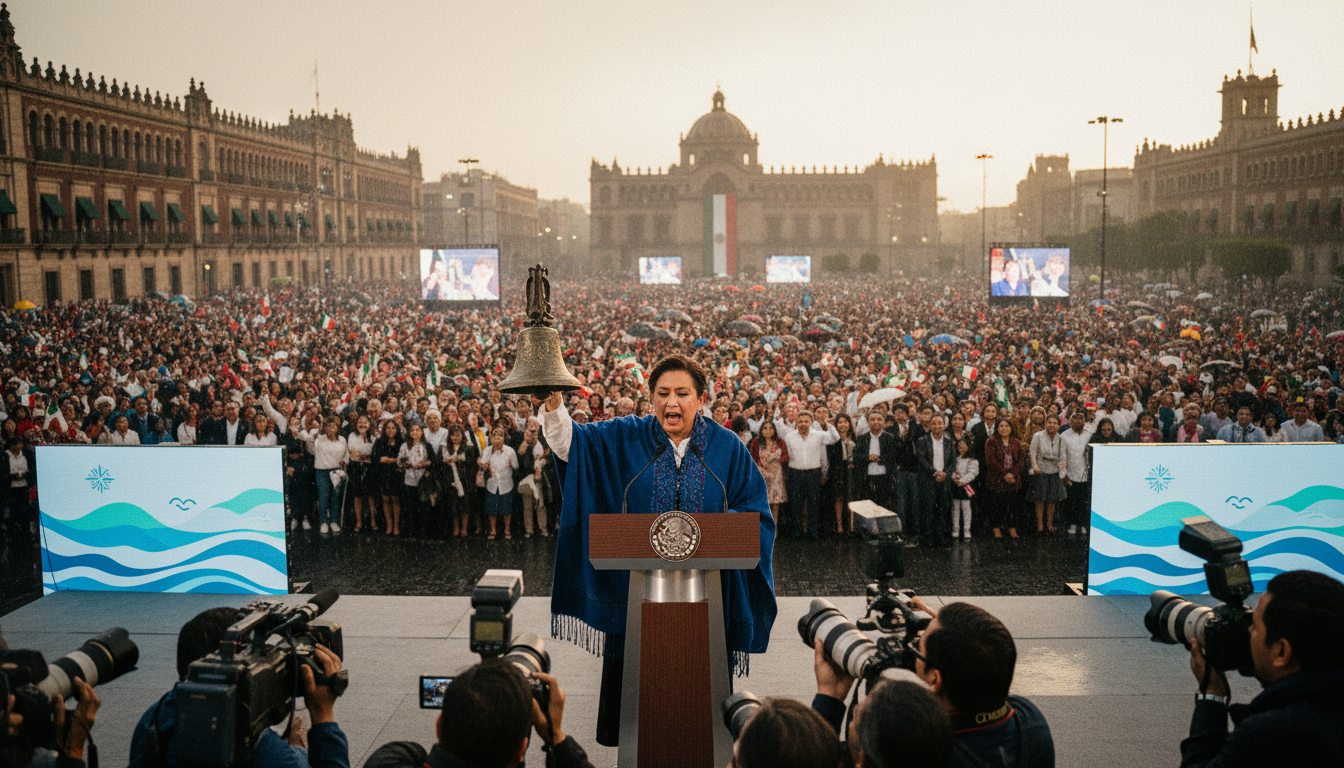
On a Tuesday night, beneath the central balcony of Mexico City’s National Palace, President Claudia Sheinbaum delivered the 216th Cry of Independence. This customary call, known as the Grito, on the eve of Mexico's Independence Day, recognized a broadened spectrum of national identity. Sheinbaum, in her address, highlighted Mexico's independence heroines and heroes, Indigenous and Afro-Mexican people, and Mexicans living abroad. She declared, “Mexicanas, Mexicanos, long live independence!” 216 years after priest Miguel Hidalgo y Costilla first issued the Grito de Dolores, a call for revolt against Spanish rule.
This specific framing of the national narrative, emphasizing diverse peoples and migrants, suggests a reorientation of Mexico's self-perception. It is a departure from a more singular, often mestizo-centric, historical recounting. The inclusion of migrants, specifically, is a notable aspect. Mexico, a nation with a significant diaspora, particularly in the United States, also acts as a transit country for migration flows, often destined for the north. The president’s acknowledgement of this group during a moment of national celebration could be seen as an attempt to integrate their experiences into the national fabric, rather than viewing them solely as an external or transient phenomenon.
The emphasis on Indigenous and Afro-Mexican populations further solidifies this expansive view. It implies an official recognition of historical contributions and ongoing presence that, while always part of the nation, have not always held such prominent symbolic placement in national rituals. This is not merely a rhetorical flourish. The previous year, in October, heavy rains resulted in floods across Mexico, leading to nearly 130 deaths or disappearances. Earlier in the year, in January, an earthquake struck, affecting roads, hospitals, and even interrupting a presidential news conference. Such events underscore the vulnerabilities faced by communities across the nation, many of them Indigenous, making the president’s symbolic embrace potentially significant.
While this internal recalibration of identity is underway, Mexico’s engagement with the broader Pacific region continues to take shape. Sheinbaum, as a presidential frontrunner in April, indicated a focus on renewable energy and water, areas with clear implications for international cooperation and investment, including with Asia-Pacific partners. However, the region also presents complexities. In October of the preceding year, the U.S. carried out strikes on four alleged drug boats in the Pacific, killing 14 individuals. This points to the ongoing security challenges in the Pacific waters, which extend beyond national maritime boundaries.
For Thailand and the wider Asia-Pacific, Mexico's evolving identity narrative, particularly its embrace of a diasporic and migrant-inclusive perspective, offers a point of observation. As nations across the Pacific Rim grapple with their own internal diversities and the increasing mobility of populations, Mexico's public articulation of identity during a foundational national event provides a relevant, if distant, case study. The integration of its people living abroad and those historically marginalized into the national celebration, even if symbolic, may reflect a broader, albeit unstated, ambition to strengthen its position as a Pacific-facing nation, fostering connections that acknowledge the movement of people, not just goods, across the ocean.
The Grito, traditionally a reaffirmation of sovereignty and independence, this year included an overture to those whose lives extend beyond Mexico’s physical borders. This adjustment in narrative, set against a backdrop of environmental challenges and regional security concerns, suggests a nuanced understanding of national strength that might seek to leverage diverse populations as a form of diplomatic and cultural capital. Its resonance, particularly for nations in the Asia-Pacific that share similar demographic complexities and maritime interests, could be quietly profound.
Sources
Newsletter
Pacific Daily
A curated briefing from Thailand, Asia-Pacific and the world.