Mexico City’s Dual Tourism Strategy: New Luxury Against Local Restrictions
The simultaneous launch of a new boutique hotel and local alcohol prohibitions in Mexico City illustrates divergent tourism approaches, impacting different segments of the hospitality market.
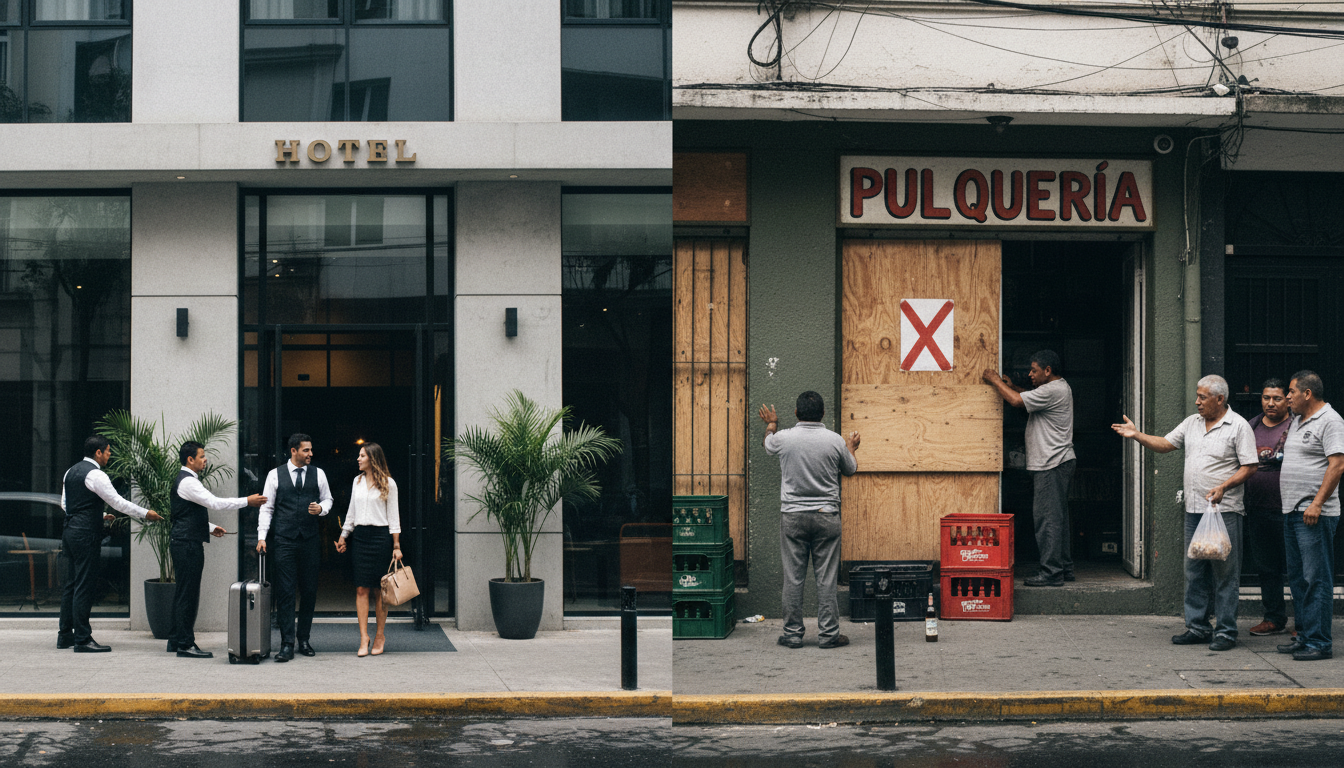
Mexico City is presenting a dual reality for hospitality operators, exemplified by recent developments. A new boutique hotel has opened, offering views of the Ángel de la Independencia. This expansion targets a segment of visitors seeking luxury amenities and specific urban landmarks. Concurrently, other areas of the city are implementing temporary restrictions that affect visitor experiences and local commerce.
Specifically, the Mexico News Daily reported on September 17, 2026, that Xochimilco neighborhoods would observe 'ley seca,' or temporary alcohol sale bans. Six neighborhoods in an area characterized by its 'tequila-fueled boat rides' are restricting alcohol sales. San Mateo Xalpa went dry from September 17 to September 24, with Colonia San Jerónimo scheduled from September 29 through October 1. These measures, enacted by the local mayor’s office, coincide with Independence Day celebrations and patron saint festivals, pointing to community-driven policy priorities.
This tension between upscale development and local controls raises questions for tourism investment, particularly when considering the Asia-Pacific context. The new hotel’s investors benefit from catering to a clientele for whom such local regulations may not be a primary concern. The incentives for local authorities in Xochimilco likely involve maintaining public order during celebrations, but the outcome is a direct financial impact on local businesses reliant on alcohol sales. The UNESCO report from September 10, 2023, on 'dignified tourism' in Mexico accelerating food security, indicates a broader policy interest in community benefit that can introduce operational complexities for the hospitality sector.
The unquoted party in this scenario is the tourist who arrives with expectations shaped by a global market but encounters fragmented experiences on the ground. For businesses in Xochimilco, the immediate cost is reduced revenue. For the new boutique hotel, located away from these specific restrictions, the impact is less direct, but the overall market perception of Mexico City as a unified tourism destination might suffer. The strongest counterargument to concerns over these restrictions is that they are temporary and localized, often linked to specific cultural events, suggesting a limited long-term impact on the city's broader appeal.
However, a repeated pattern of localized prohibitions could influence a destination’s long-term attractiveness for international visitors seeking consistent experiences. The outlook for Mexico City's hospitality sector depends on how effectively it integrates these disparate priorities. The unresolved constraint remains the reconciliation of high-end tourism’s commercial drivers with community-led governance. This balance will ultimately determine at what occupancy levels and under what conditions the varied offerings sustain a profitable tourism ecosystem.
Sources
Newsletter
Pacific Daily
A curated briefing from Thailand, Asia-Pacific and the world.