Kiribati's Football Victory Signals Shifting Dynamics Beyond Traditional Sporting Strongholds
The recent win by Te Eitei at the Fiji Inter-District Championship underscores the evolving engagement of smaller Pacific nations in regional sports, challenging established hierarchies and potentially altering development trajectories.
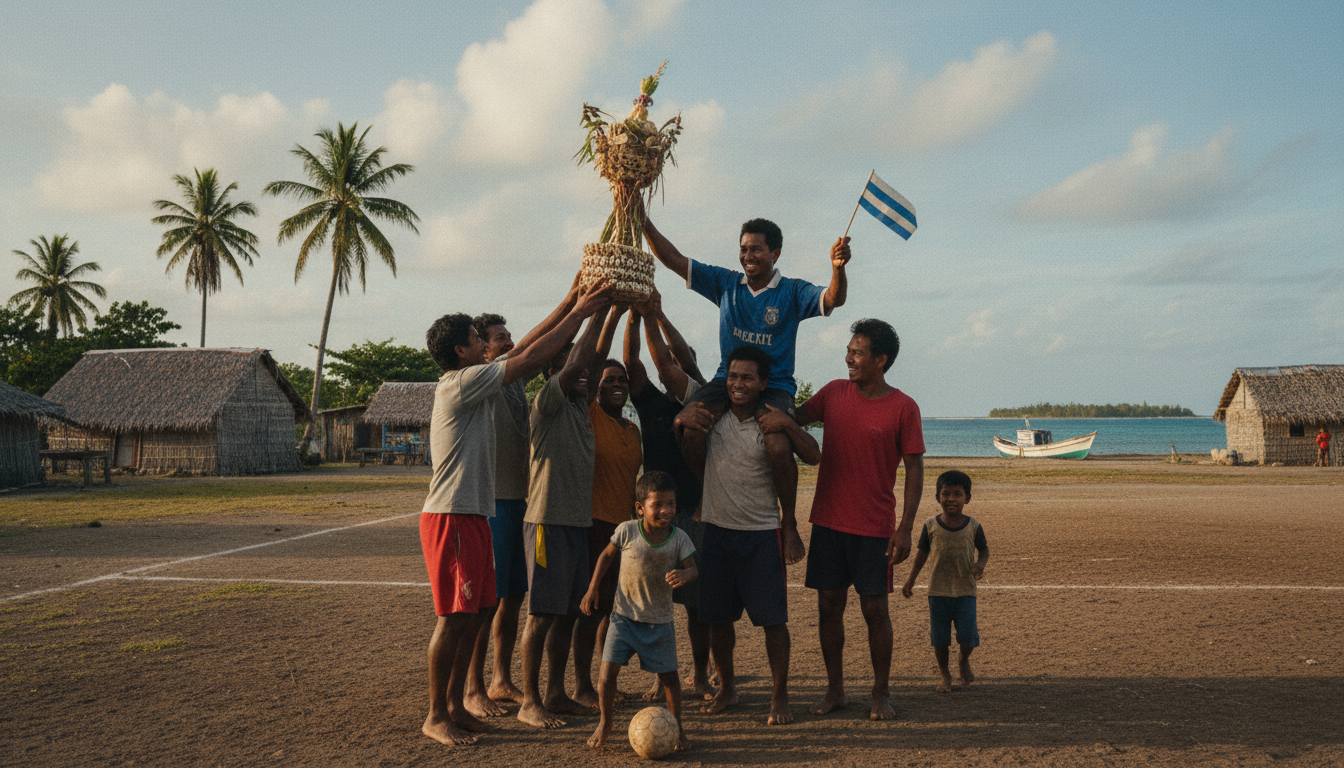
The national men's football team from Kiribati, Te Eitei, secured its maiden international trophy by defeating Seaqaqa 6-1 in the Fiji Inter-District Championship premier division final. This victory, while seemingly a singular sporting achievement, reflects a broader, quiet shift in regional participation and influence.
Historically, sporting success in the Pacific has often concentrated in nations with larger populations or more developed infrastructure, such as Fiji in rugby 7s, where it is a reigning champion. Kiribati, an associate member of the Oceania Football Confederation but not a full member of FIFA, has until now largely existed on the periphery of international football. The team's participation as an invitational squad in the Inter-District Championship (IDC) in Suva last week, a second-tier competition, itself signals an increased commitment to engagement.
This outcome is not an isolated event. Nauru is poised to make its international soccer debut with a match against Kiribati pencilled in for December, indicating a growing internal dynamic within the region's football landscape. While smaller island nations like Guernsey also compete on larger stages, as evidenced by Tommy Teers' boxing at the 2026 Commonwealth Games, Kiribati’s football success in an established regional tournament is distinct. The path to becoming a recognized international football team, as described in The New York Times, involves navigating complex geographical, political, and administrative hurdles.
For Kiribati, this victory, even in a premier division of a domestic Fijian tournament, could be consequential. It offers visibility and, potentially, increased investment and interest in football development, diverting resources or attention from other areas. The Fiji Football Association will see Seaqaqa FC secure a place in its top league next season, demonstrating the competitive nature of the tournament Te Eitei won. Critics might argue that a win in a local Fijian competition does not equate to substantial international recognition or a direct challenge to the dominance of more established footballing nations within the Oceania Football Confederation, let alone globally. However, for a nation like Kiribati, it marks a significant internal milestone.
The regional implications extend beyond the immediate celebration. If this momentum translates into sustained development, it could foster greater sporting integration and competition across the Pacific. This would challenge the existing patterns where power and resources are unevenly distributed. The unresolved question is how this isolated success can be leveraged into long-term infrastructure and talent development, especially given Kiribati's current status outside full FIFA membership.
Sources
Newsletter
Pacific Daily
A curated briefing from Thailand, Asia-Pacific and the world.