Indonesia's Young Voters Are Rewriting the Rules of Political Engagement
Millennials and Gen Z make up a large share of the electorate. They are reshaping campaigns, protest and public debate online and on the street.
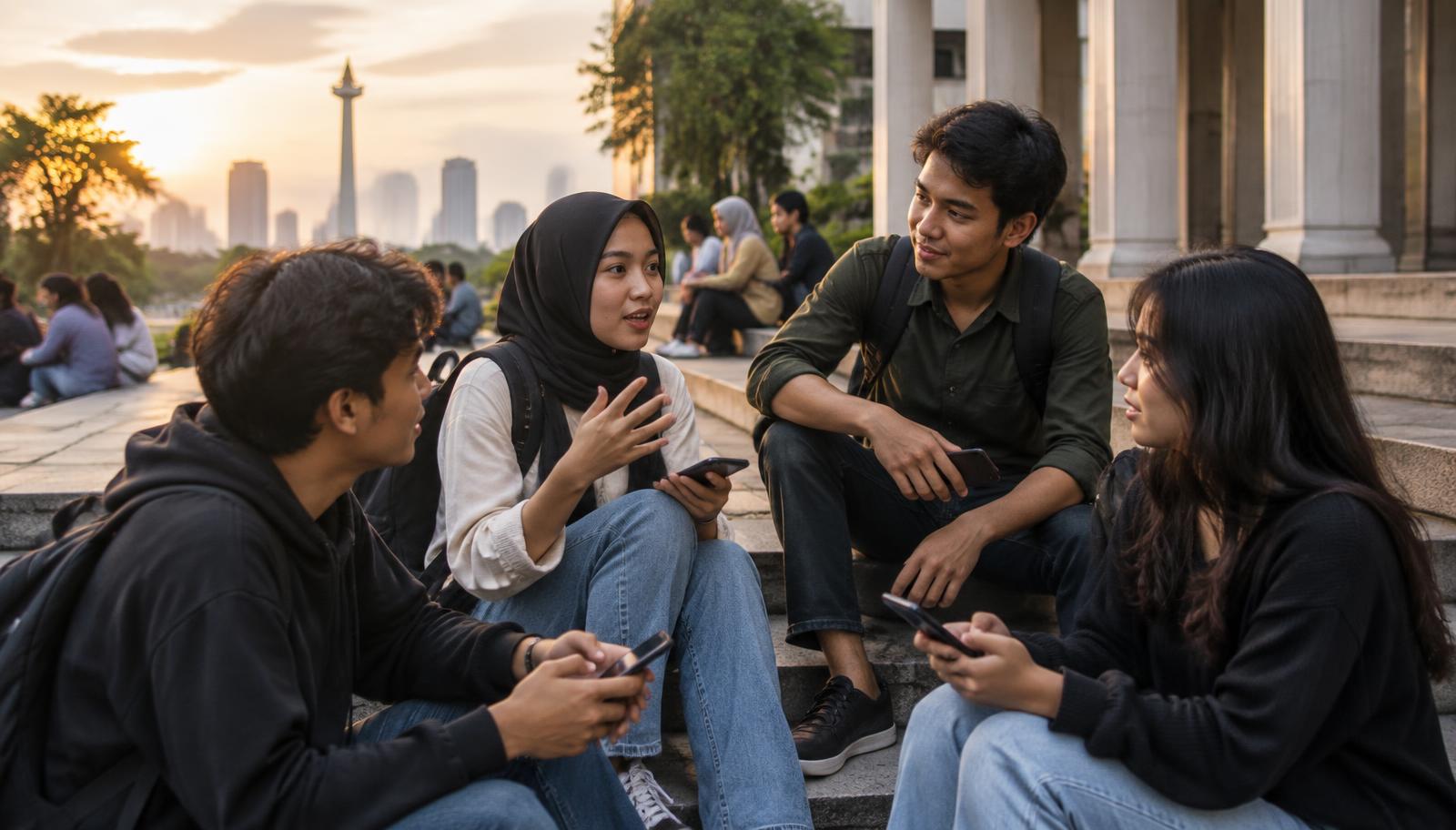
JAKARTA — On campus steps in central Jakarta, a group of students scroll through clips of a parliamentary debate, pausing to argue over a point of policy. Scenes like this explain why Indonesia's political parties now spend so much energy courting the young.
Indonesia is one of the world's largest democracies, and its electorate skews young. Data published by the General Elections Commission (KPU) have shown that voters under about 40 account for a large share of registered voters. Statistics Indonesia (BPS) figures likewise point to a population whose median age is still under 30. That demographic weight has turned youth engagement from a side issue into a central strategy for every major campaign.
Politics through the phone
For many young Indonesians, politics arrives first through social media. Short videos, memes and livestreams shape impressions of candidates long before formal policy platforms do. Campaign teams have responded with influencer partnerships, playful branding and constant online presence. Critics worry this rewards style over substance and makes voters vulnerable to disinformation and coordinated messaging.
Yet the same tools also give young people a voice. Student groups and civic organisations use online platforms to explain legislation, monitor officials and organise. When proposed laws have touched on issues such as labour rights, education costs or civil liberties, digital campaigns have quickly turned into street demonstrations led largely by students.
Issues that matter
Surveys of young Indonesians consistently highlight jobs, the cost of living and education as top concerns. Many graduates struggle to find stable work matching their qualifications, and the rise of informal gig employment brings flexibility but little security. Environmental concerns, from urban flooding in Jakarta to deforestation, also rank higher among younger voters than older ones.
Corruption remains a recurring theme. Young voters often express frustration with entrenched political families and slow reform, even as they continue to participate in large numbers at the ballot box.
A test for democracy
Indonesia's youth engagement is a sign of democratic vitality, but it also tests institutions. Election bodies must counter disinformation without restricting speech. Parties must offer more than viral content if they hope to keep young supporters beyond a single election cycle.
As the sun sets over the campus, the students pack up their debate. Their conclusion is not unanimous, which may be the healthiest sign of all.
Sources
Newsletter
Pacific Daily
A curated briefing from Thailand, Asia-Pacific and the world.