Haze Returns to Singapore: A Recurring Cost for Regional Tourism
Persistent unhealthy air quality in Singapore highlights an unresolved regional externality, impacting the hospitality sector beyond its borders.
SINGAPORE
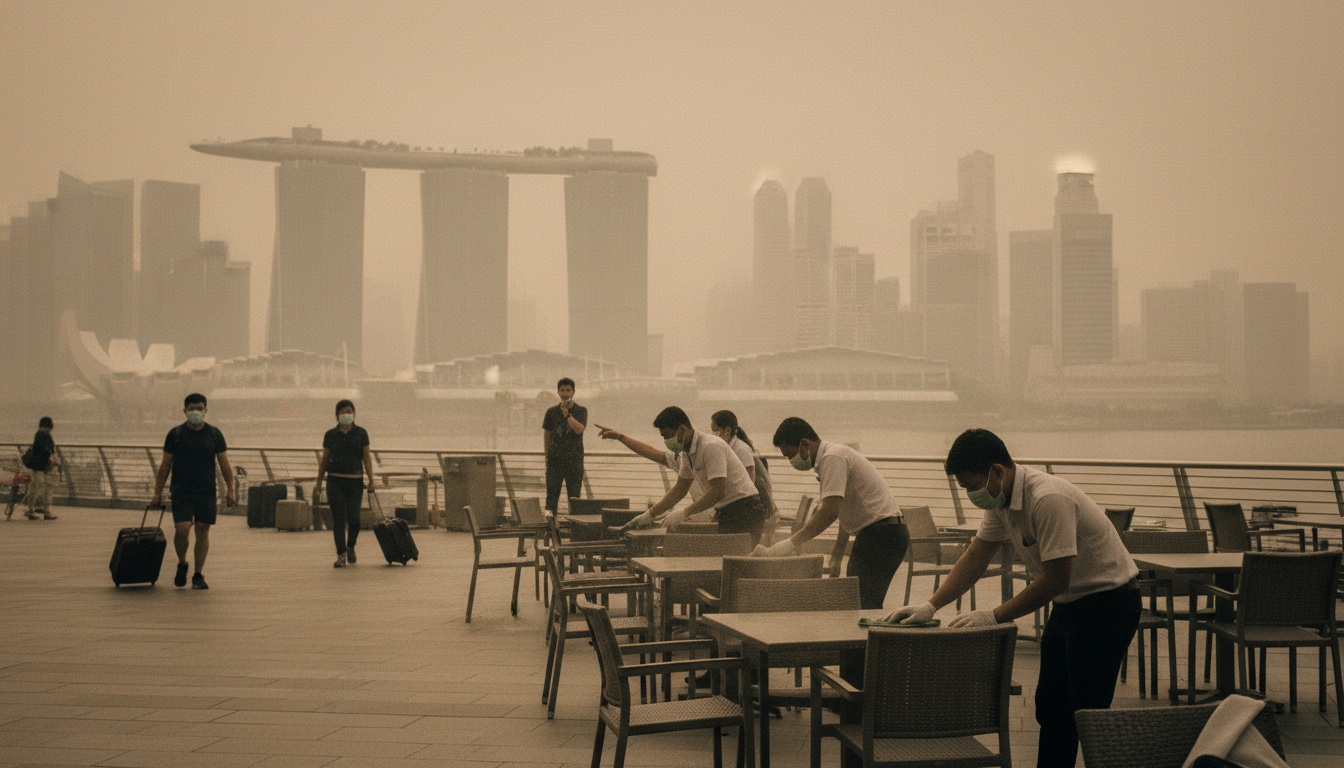
Singapore’s central region recorded a Pollutant Standards Index (PSI) of 102 at noon on September 14, 2026, marking a return to unhealthy air quality after four days of moderate readings. This follows earlier instances, such as September 9, 2026, when the PSI reached 105 in the central region, before dropping below 100 on September 10, 2026. The National Environment Agency (NEA) stated it is monitoring air quality across Singapore, attributing the conditions to persistent hotspots and haze in parts of Indonesia.
This recurring environmental issue represents a direct operational and financial burden on the hospitality sector, particularly in tourist-dependent economies like Thailand. While the immediate data points to Singapore, the root cause—regional haze—impacts a broader geographical area. For every day a major regional hub like Singapore registers unhealthy air, the perceived quality of a broader Southeast Asian holiday is diminished. Travelers, particularly those seeking leisure or medical tourism, often make decisions based on perceived safety, comfort, and, critically, air quality metrics in their intended destinations, and often view the region as a single, interconnected product.
The incentive for regional governments to address transboundary haze remains complex. The NEA monitors the situation, a factual response, but the underlying issue of Indonesian hotspots persists. From a market realist perspective, the cost of haze is borne by various stakeholders, but primarily by businesses and consumers in affected areas. Airlines face potential flight disruptions or reduced demand, hotels see cancellations or a slowdown in bookings, and local tourism operators observe a drop in foot traffic for outdoor activities. The immediate payer is the visitor, who experiences a compromised holiday, and the business, which absorbs reduced revenue.
However, a counterargument might suggest that short-term spikes in PSI readings are isolated events, quickly forgotten, and do not materially alter long-term tourism trends. The four days of moderate readings preceding the September 14 spike could be cited as evidence of transient conditions. This perspective often underestimates the cumulative effect of repeated, publicly reported environmental advisories. For an industry built on experience and perception, consistency in air quality is a significant, if often unquantified, amenity. Potential visitors, particularly those from source markets with high environmental standards, factor such risks into their travel planning, leading to diverted bookings or reduced spending.
For destinations like Thailand, which compete with Singapore for regional and international visitors, the persistence of haze in a key gateway city like Singapore signifies an ongoing risk to inbound tourism. While Thailand itself may not always experience the same PSI levels, the broad perception of Southeast Asian air quality during peak haze seasons can deter potential travelers across the region. Until a durable, region-wide solution to transboundary haze is implemented, the hospitality sector will continue to manage the financial repercussions of an environmental externality it cannot control.
Sources
Newsletter
Pacific Daily
A curated briefing from Thailand, Asia-Pacific and the world.