Electric Performance Cars and California's Pacific Coast Test
Supercar makers and EV pioneers are competing to prove that electric power can deliver emotion as well as efficiency.
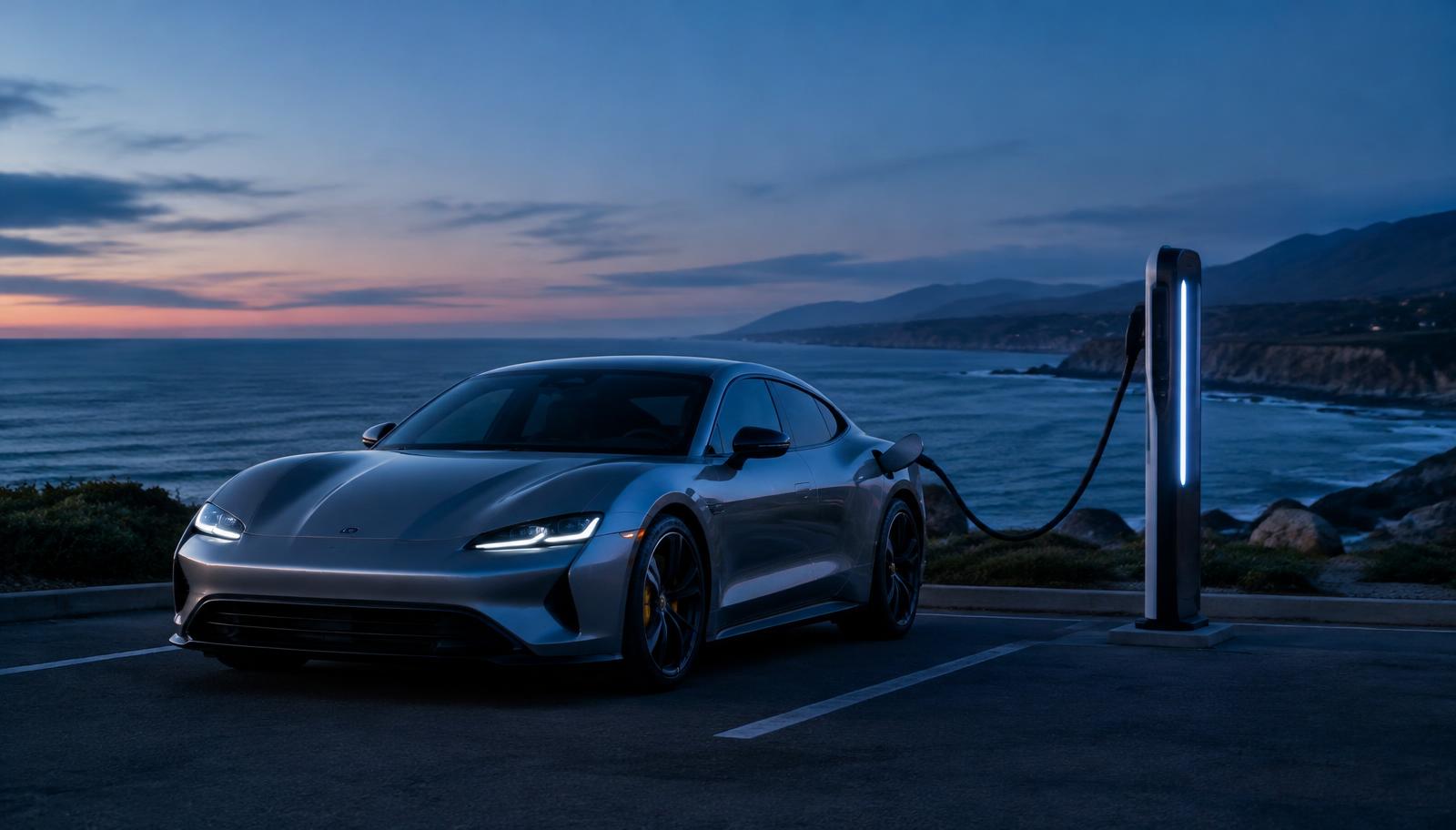
BIG SUR, California — At a charging station above the Pacific, a low silver coupe draws power as the light fades over the ocean. A few years ago, the idea of a high-performance car stopping to plug in on Highway 1 would have seemed like a compromise. Today it is increasingly the future that luxury automakers are betting on.
California sits at the centre of that shift. The state has some of the most ambitious clean-vehicle rules in the world, set by the California Air Resources Board, including targets to phase out sales of new petrol-only passenger cars over the coming decade. Because California is such a large market, its rules influence how global carmakers plan their product lines.
From efficiency to emotion
Early electric vehicles were sold mainly on efficiency and running costs. Tesla changed that by showing that instant torque could deliver startling acceleration. Now traditional performance brands, including established supercar makers, are developing hybrid and fully electric models while trying to preserve the sound, feel and character that define them.
That is the real challenge. Speed is easy for an electric motor; emotion is harder. Engineers are experimenting with weight reduction, battery placement, torque vectoring and even synthetic soundscapes to give drivers a sense of connection.
Infrastructure and range
For coastal road trips, charging infrastructure is the practical test. Federal and state programmes, including initiatives supported by the US Department of Energy, have funded fast chargers along major corridors. Remote scenic routes still have gaps, and charging times remain a consideration for drivers covering long distances.
Battery weight also matters for performance cars. Heavier vehicles affect handling and tyre wear, and manufacturers are investing in new chemistries and structural battery designs to shed kilograms.
A Pacific supply chain
The transition also links California with Asia. Battery cells, semiconductors and many components come from manufacturers in Japan, South Korea, China and Taiwan. Lithium and nickel supply chains stretch to Australia and Indonesia. The electric supercar is, in many ways, a Pacific Rim product.
As night falls over Big Sur, the coupe finishes charging and pulls back onto the coast road. Its silence is striking. Whether buyers fall in love with that silence will decide how quickly the performance car world goes electric.
Sources
Newsletter
Pacific Daily
A curated briefing from Thailand, Asia-Pacific and the world.