Digital Echoes in Sacred Spaces: When Faith Encounters the Cloud
The recent cybersecurity incident affecting Singaporean religious institutions highlights a pervasive, yet often overlooked, shift in how communal life is managed.
SINGAPORE
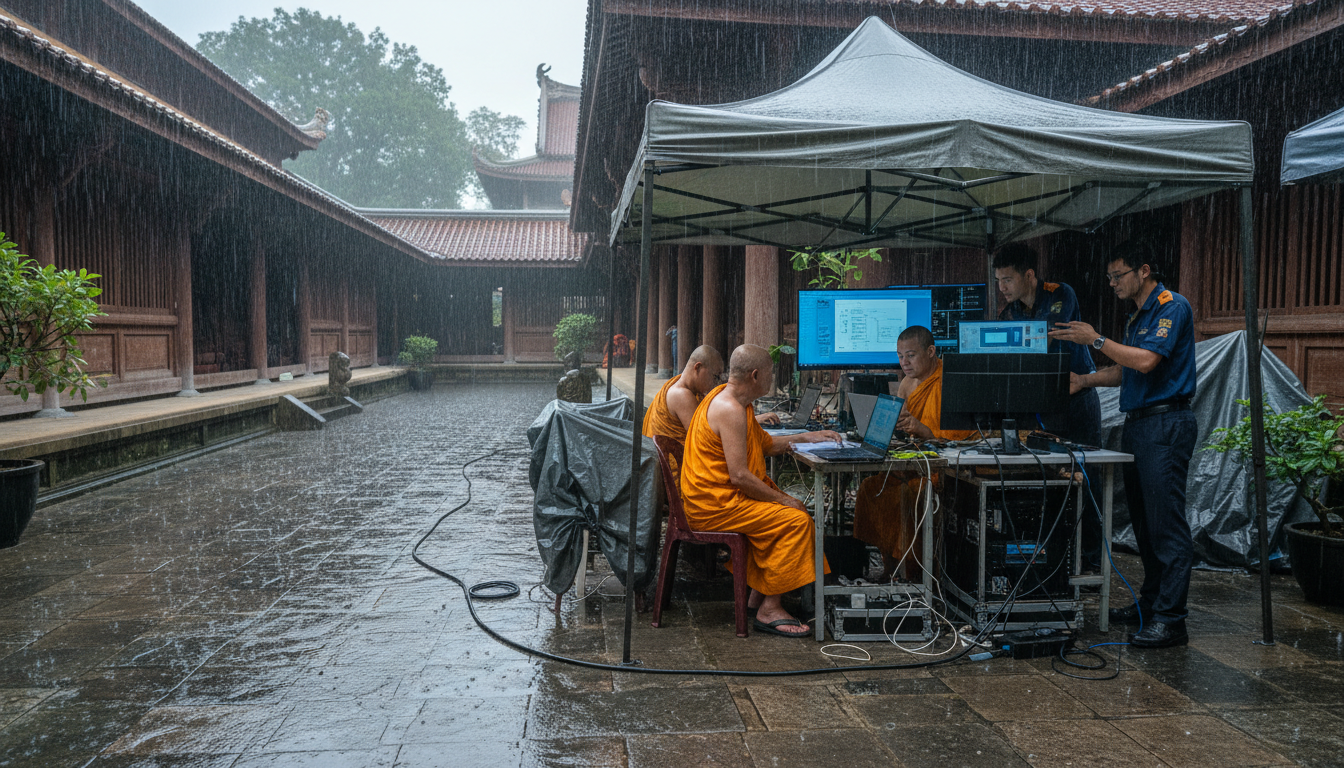
The digital footprints of communal life are expanding, reaching into spaces once defined by tangible presence and centuries-old rituals. In Singapore, an event reported earlier this week illustrates this quiet transformation: a cybersecurity incident impacted the human resource and payroll systems of 48 mosques and four madrasahs. The Islamic Religious Council of Singapore (MUIS) stated that no ransom was paid, but the incident, first reported on September 15, 2026, by The Straits Times, indicated that staff details were potentially compromised.
This is not a tale of grand technological revolution, but of the mundane, yet essential, administrative systems that underpin institutions. The fact that religious bodies, traditional pillars of community, now rely on digital platforms for their fundamental operations is a subtle cultural signal. It reveals a quiet adaptation, where the mechanics of managing staff, salaries, and possibly even community engagement, have migrated to the cloud. This migration, while efficient, introduces a new, invisible vulnerability.
The regional context amplifies this concern. The Diplomat, in April 2026, highlighted a perceived mismatch between the rapid pace of AI development and the slower evolution of cybersecurity policy in Southeast Asia. This sentiment was echoed by the South China Morning Post, also in April 2026, questioning the ability of Singaporean firms to close their cyber defence gaps against AI threats. These observations suggest a broader landscape where digital adoption outpaces protective measures.
For a region like Asia-Pacific, where diverse cultural and religious practices intersect with accelerating digital transformation, such incidents are instructive. They demonstrate that the challenge of cybersecurity is not confined to multinational corporations or government agencies. It extends to the very fabric of community infrastructure, encompassing institutions like the MUIS. The potential compromise of staff details within these sacred-yet-digitally-dependent spaces is a specific, verifiable outcome of this shift. It shows that the first habit to change was the digital archiving of essential records, and it was the IT systems that noticed first.
This digital entanglement presents a tension: the efficiency and interconnectedness offered by technology versus the inherent risks that come with storing sensitive information remotely. As communal organisations in places like Thailand and across the region increasingly integrate digital systems, the incident in Singapore offers a quiet cautionary tale. It underscores that the protection of digital infrastructure is not merely a technical issue, but a critical component of preserving the integrity and trust within communities, extending even to the quiet dignity of their administrative processes.
Sources
Newsletter
Pacific Daily
A curated briefing from Thailand, Asia-Pacific and the world.