Credit Card Gap in Mexico: A Proxy for Asia's Financial Integration Challenge
Despite economic opening, most foreign residents in Mexico bypass local credit. This reluctance signals broader hurdles for financial institutions and cross-border commerce in emerging markets, including parts of Asia.
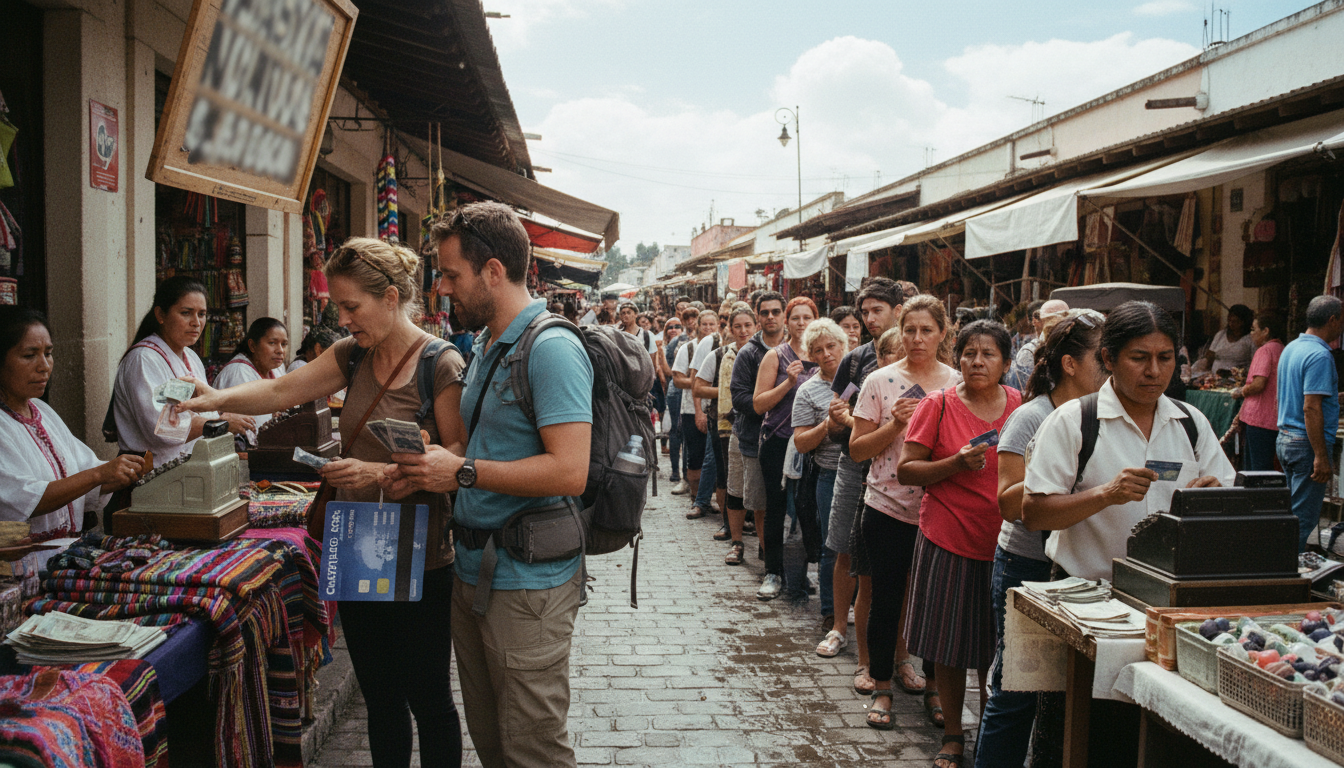
Only one-fifth of foreign residents in Mexico possess a local credit card, according to a September 2026 Mexico News Daily financial survey. This figure suggests a disconnect, given that a significant majority of respondents in the same survey indicated they held a local bank account. The bulk of foreigners in Mexico, presumably, continue to use cards issued by foreign banks.
This trend, observed in a market that has actively sought international engagement—President Tony Tan noted Mexico's economic opening provided opportunities for Singapore in 2016—raises questions pertinent to financial integration in other developing regions, particularly across the Asia-Pacific. While Mexico's situation is unique, characterized by long-standing concerns like those shared with South Korea regarding Japan’s Fukushima decision (2021) or China's application to join the Pacific Rim trade pact (2021), the underlying financial behavior provides a useful lens.
The incentive for foreign residents to maintain their home-country credit cards is clear: these cards often offer 'lucrative perks,' as identified by Mexico News Daily. Cash back programs are one such example. Local institutions struggle to compete with these established benefits, leaving a substantial segment of the market financially unintegrated at a credit level. This dynamic means local banks forego potential revenue from transaction fees, interest, and data on a demographic with likely higher disposable income.
The immediate cost is borne by Mexican financial institutions, which miss out on building credit relationships with a segment of their resident population. The long-term implications extend to local businesses that might benefit from more localized spending patterns and data, or even the potential for financial products tailored to these foreign residents. While a local bank account provides basic transactional capability, the absence of local credit relationships indicates a shallower financial commitment to the host economy.
A counterargument posits that the cost of establishing credit and the perceived value of foreign card perks outweigh any marginal convenience offered by a local card. This may be true for individual cardholders. However, the aggregate effect presents a missed opportunity for Mexico's financial sector. For the Asia-Pacific, where numerous emerging economies are striving for greater regional and international financial ties, Mexico's experience serves as a clear signal: an ‘open’ economy does not automatically translate to deep financial integration. The challenge remains for local banks to offer compelling products that dislodge the comfort and benefits foreigners derive from their existing financial instruments, or to accept a persistent gap in the financial services landscape.
Sources
Newsletter
Pacific Daily
A curated briefing from Thailand, Asia-Pacific and the world.