Conceptual Housing: A Distant Solution for Asia's Urban Densification
Toronto's 'Housing on the Line' exhibition offers designs, but scaling them for Bangkok or Jakarta poses distinct economic and social hurdles.
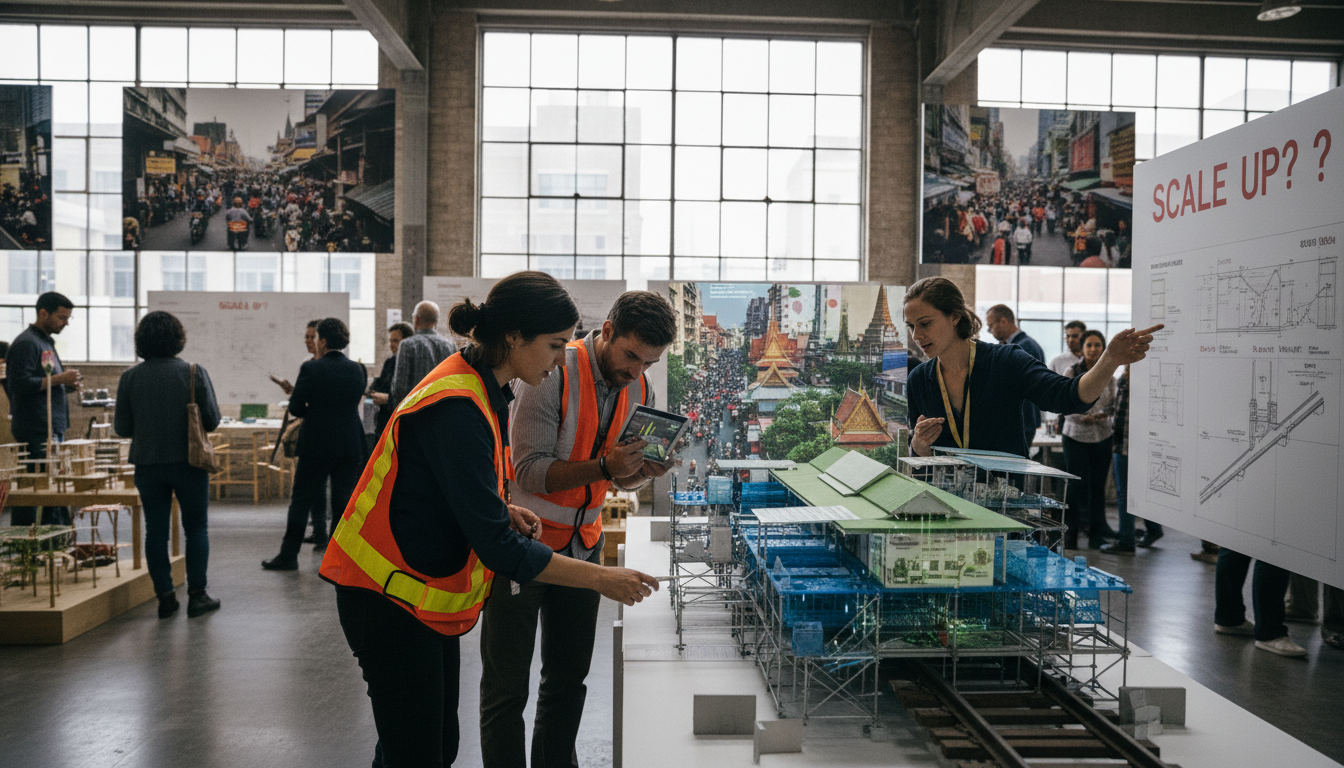
The upcoming ‘Housing on the Line’ exhibition in Toronto, showcasing speculative architectural designs for housing, highlights a global pursuit of solutions for urban densification. Initiated by Superkül and developed with six other firms, this conceptual project will open to the public on September 24, 2026, in Liberty Village. While such initiatives explore design frontiers, their practical application in rapidly expanding Asian urban centers, including Bangkok or Manila, presents a complex set of challenges, particularly concerning affordability and infrastructure.
Architectural speculation in Canada, where the housing market in some major cities, including Toronto, faces significant affordability issues, often focuses on design innovation. This is distinct from the market dynamics in the Asia-Pacific region. China's housing market, for instance, topped global scales in the 12 months to June 2017, driven by sustained demand and rapid urbanization, as reported by the South China Morning Post. This scale of development demands solutions that are not just spatially efficient but also economically viable for a wide demographic.
When assessing conceptual projects for markets like Thailand, the central question remains: who is priced out by these proposals, and where do they go? While advanced architectural designs might optimize space and potentially reduce construction costs through innovation, the cost of land in prime urban areas like Bangkok’s central business district often renders even the most efficient designs financially out of reach for a significant portion of the population. The incentives for developers in these high-demand markets often lean towards maximizing profit per square meter, which does not always align with broad-based affordability.
Consideration of who benefits from such designs leads to a focus on the upper segments of the market, where disposable income allows for investment in novel living concepts. The broader urban population, particularly those moving from rural areas seeking economic opportunity, requires housing solutions that prioritize scale, cost-effectiveness, and proximity to work over experimental aesthetics. These groups are consistently priced out of core urban areas, pushing them into informal settlements or distant, underserved peripheries. Policymakers face pressure to balance urban growth with equitable access to housing.
While the 'Housing on the Line' exhibition may spur architectural discourse, its direct impact on alleviating housing crises in cities like Jakarta or Ho Chi Minh City is likely to be limited. The core constraint is not merely design innovation but the fundamental economic structure of land ownership, development finance, and income disparity. Until these economic realities are addressed, conceptual housing projects risk remaining theoretical exercises, admired but not widely adopted, leaving the unresolved challenge of providing affordable, accessible housing for the majority.
Sources
Newsletter
Pacific Daily
A curated briefing from Thailand, Asia-Pacific and the world.