Beyond the Threshold: Re-entry and Recidivism in Singapore
The case of a young man highlights the complexities of familial violence and the limits of correctional interventions, reflecting broader societal challenges.
SINGAPORE
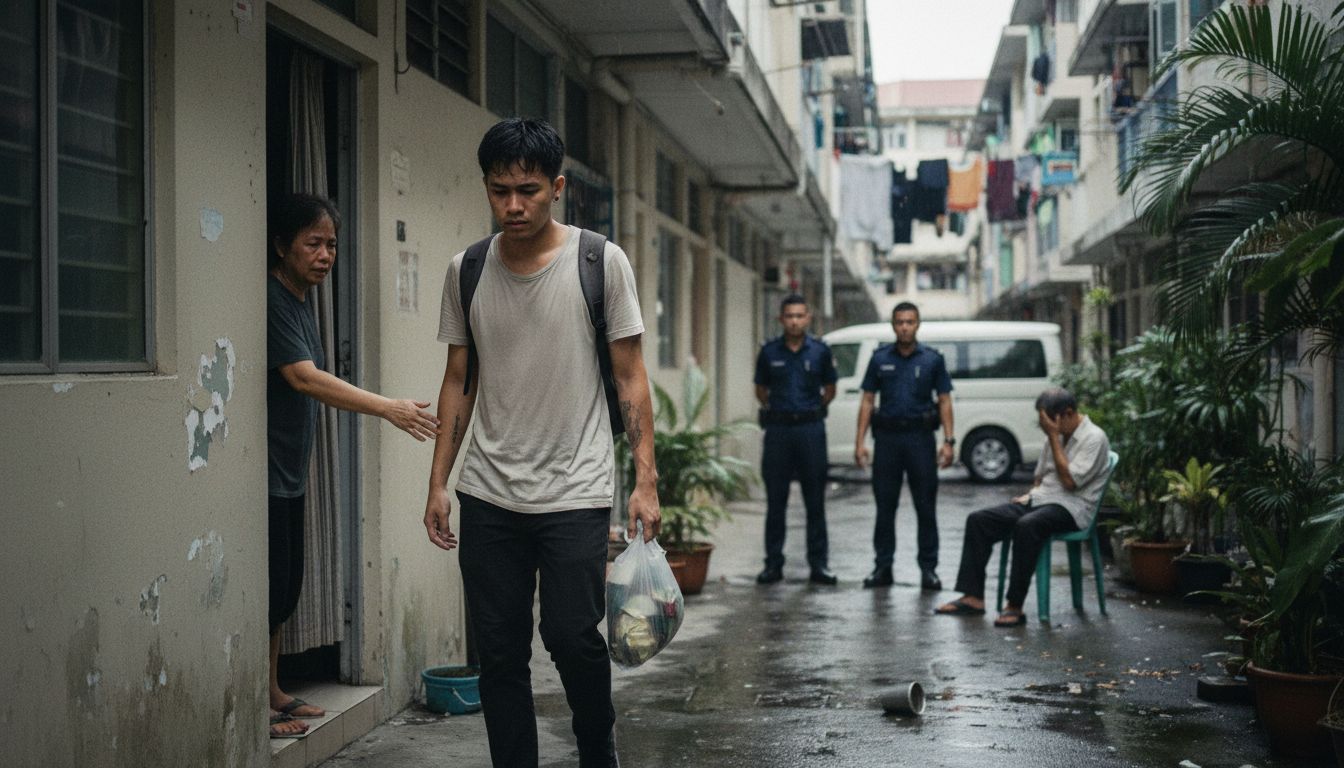
The return of a young man to his family in Singapore, following three years spent in a boys' home for sexually assaulting his sister at age 13, marks a point of departure for contemplation. This individual, now facing jail and caning for molesting his sister again, brings into focus a narrative often obscured by official pronouncements and statistical summaries. The event, reported on September 15, 2026, by CNA Lifestyle, is not an isolated incident but rather a reiteration of a pattern where intervention appears to falter.
Singapore’s correctional system aims to rehabilitate, yet the re-offence in this case suggests a gap between the intent of the intervention and its outcome. The initial period in a boys' home was presumably designed to address the underlying issues that led to the first assault. The subsequent return to the family unit, the very environment where the initial harm occurred, presupposes a level of resolution or safety that was evidently not achieved. This sequence prompts a closer look at the efficacy of such returns, especially when the victim remains within the same domestic sphere.
Such cases are not unique to Singapore. The region has seen its share of family-related violence that confounds simple solutions. Reports, such as the 2020 BBC account of missed warnings about a killer, underscore a recurring challenge: the difficulty in predicting and preventing repeat offences, particularly within the perceived sanctuary of the home. The judicial response of jail and caning, while serving as punishment, does not inherently alter the dynamics that permit such abuse to re-emerge. It addresses the symptom, not necessarily the root.
The paradox here is the tension between reintegration and protection. A central tenet of rehabilitation is the eventual return of an individual to society, often to their original family structure. However, when the family itself is the site of the crime, this return can inadvertently place victims at renewed risk. The decision to return the young man to his family, after a period of institutional care, implicitly conveys a judgment that the risk was mitigated. The outcome suggests this judgment was misplaced or that the family environment itself did not offer the necessary safeguards.
This specific instance compels a broader consideration of how societies across Asia-Pacific manage perpetrators of domestic and familial violence, especially when they are minors. The question extends beyond judicial penalties to the social and psychological support structures available to both offender and victim upon re-entry. It highlights the often-unseen complexities of family dynamics, where punitive measures alone prove insufficient. The narrative concludes, not with a simple legal outcome, but with an enduring question about the true effectiveness of interventions designed to break cycles of harm within the home.
Sources
Newsletter
Pacific Daily
A curated briefing from Thailand, Asia-Pacific and the world.