Autonomous Vehicle Safety: Beyond the Driver's Seat
The presence of human safety operators in autonomous vehicles, far from a temporary measure, highlights persistent economic and technical challenges for deployment across Asia-Pacific.
SINGAPORE
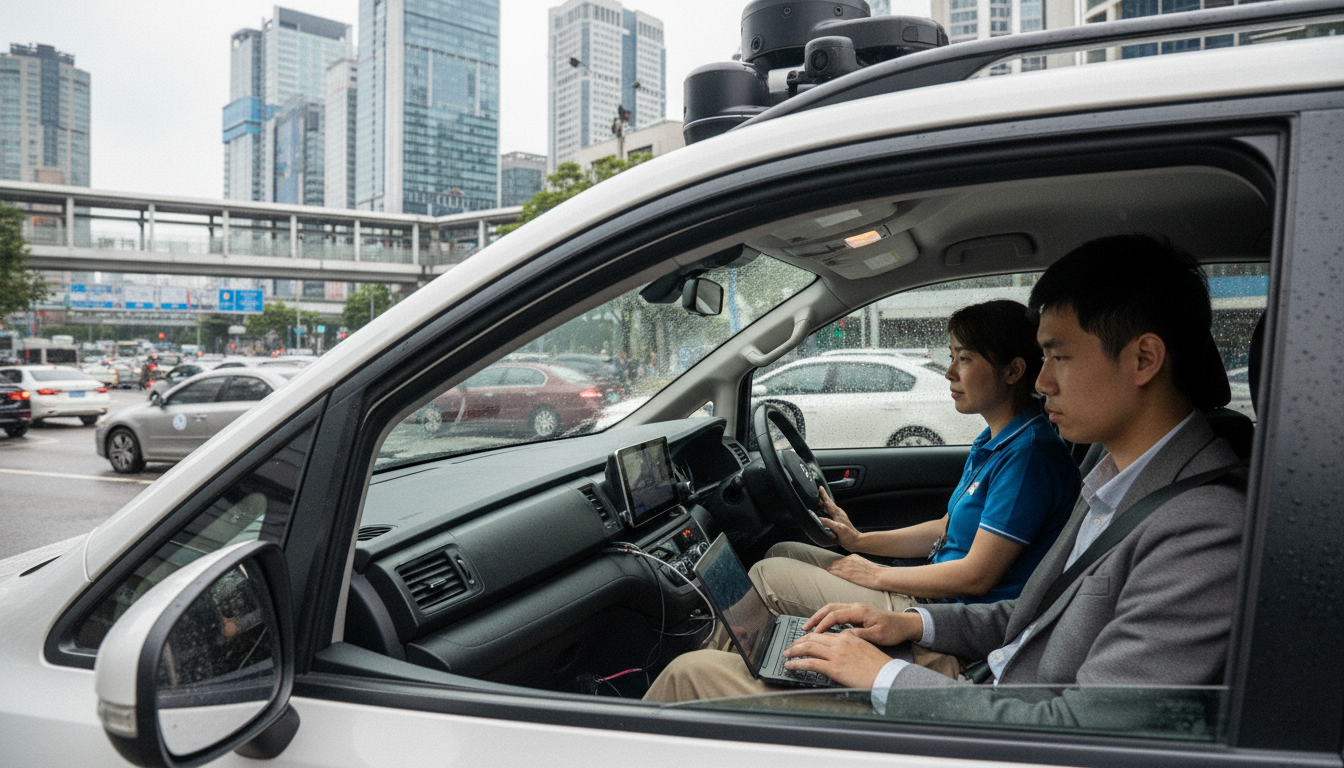
The role of human safety operators like Sherman Seng and Sarah Ahmad, who manage autonomous vehicles and provide feedback on performance, is more involved than public perception often allows. CNA Lifestyle reported on September 15, 2026, that these operators, contrary to misconceptions, do not merely 'sit there and do nothing'. Their tasks include learning left-hand drive and offering critical input on vehicle systems. This detailed human involvement points to a fundamental tension within the autonomous vehicle industry: the drive for full automation against the current reality of its technical and operational limitations.
The industry's trajectory suggests an expansion of autonomous capabilities. SAP News Center reported in July 2026 that Asia Pacific customers are accelerating their journey to the 'Autonomous Enterprise'. Specific technological advancements, such as China's Hesai developing lidar sensors capable of detecting colour for autonomous driving (Reuters, April 2026) and ZYT’s AI being tested to navigate Shenzhen streets (Reuters, March 2026), underscore progress. However, the continued necessity for highly engaged human safety operators indicates that the 'autonomous' label currently represents a spectrum, not an absolute. The cost of maintaining these human safeguards, coupled with the capital expenditure in development, introduces a burden on the path to widespread profitability.
At what operational scale and cost does this technology become viable? The presence of safety operators signifies that the cost of failure, both financial and reputational, is still considered too high for fully unsupervised deployment. These operators are not merely a redundant failsafe; they are an integral part of the system's current functionality and development cycle. Each hour an operator spends actively monitoring, intervening, or providing feedback represents a cost that must be absorbed. This cost model challenges the narrative of pure cost-saving through automation, at least in the short to medium term.
Economic Hurdles to Full Autonomy
For businesses deploying autonomous fleets, the requirement for human oversight means that many of the anticipated labor cost savings are not yet materializing. While the long-term vision of a driverless fleet promises efficiency, the current phase necessitates a dual expenditure: investing in advanced autonomous technology and maintaining a skilled human workforce to supervise it. The complexity of regulatory environments across the diverse Asia-Pacific region further compounds this, requiring tailor-made solutions and potentially delaying scalable, region-wide deployment.
The industry's current operational model suggests that the direct human cost is being paid by the deploying companies, while the benefits of enhanced safety and data collection accrue to the technology developers.
While advancements are clear, the economic reality of autonomous vehicle deployment remains anchored by the human element. The continued reliance on individuals like Sherman Seng and Sarah Ahmad is not a sign of failure but a clear indicator of where the technology currently stands. The ultimate success and profitability of autonomous vehicles in the Asia-Pacific will depend on their ability to transition beyond supervised operations, a hurdle that still appears distant for many applications. Until then, the human operators continue to bear direct costs associated with ensuring safety and advancing the technology, while consumers may bear indirect costs through potentially higher service prices, and technology developers gain from the accumulated operational data. The question of when the scale tips towards a truly driverless economy, where human intervention is negligible, remains unresolved.
Sources
Newsletter
Pacific Daily
A curated briefing from Thailand, Asia-Pacific and the world.