Asian Games Gold for Singapore Signals Operational Shift in Regional Combat Sports
Tiffany Teo's victory at the 20th Asian Games prompts re-evaluation of MMA infrastructure and athlete development across Asia-Pacific.
SINGAPORE
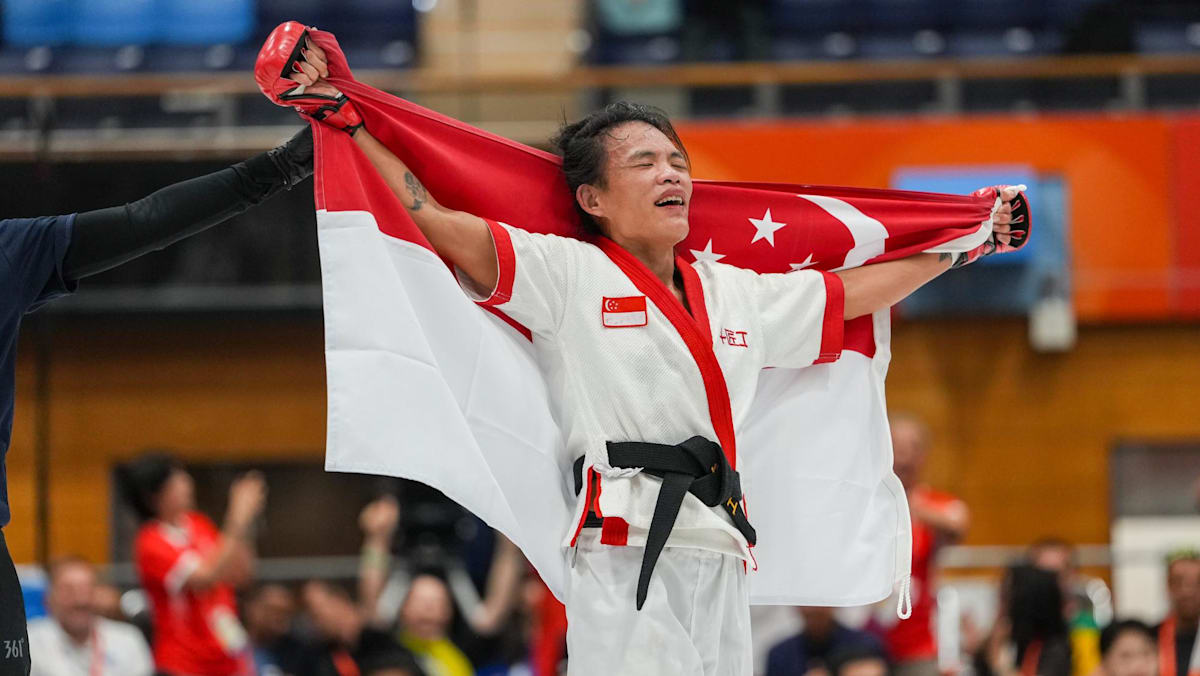
Tiffany Teo's gold medal win for Singapore in the women's traditional 60kg MMA final at the Nagoya City Inae Sports Center on September 22, 2026, marks a specific operational achievement. This event, Singapore’s first gold of the 20th Asian Games, brings into focus the operational capacity required for a nation to produce top-tier combat athletes.
Prominent mixed martial arts organizations have historically shown interest in the Asian market. One such organization announced intentions for a "big splash" in Asia and held a major event in Singapore, as reported on March 29, 2022. Concurrently, Asia-based organizations like ONE Championship have secured high-profile athletes, such as Eddie Alvarez in 2018. These developments indicate a growing professional circuit and an expanding talent pool in the region. The Asian Games result, however, underscores the national-level infrastructure that must support individual athlete performance to translate into international competitive success.
For countries like Thailand, already a hub for traditional martial arts, the question arises regarding the integration of modern mixed martial arts into existing sporting frameworks. The operational challenge lies not just in identifying talent, but in establishing a consistent, scalable pipeline for training, competition, and athlete welfare that can withstand the demands of international competition cycles. This includes facilities, coaching, and a domestic competitive structure that can prepare athletes for events like the Asian Games.
The gold medal may draw further investment and attention to Singapore's combat sports programs, potentially increasing the operational load on existing facilities and coaching staff. If the infrastructure is not scaled proportionally, increased participation could lead to bottlenecks in training capacity and access to high-level coaching, impacting overall athlete development. The immediate implication for Singapore is the necessity to sustain and expand this operational model to ensure this win is not an outlier but a precursor to continued success.
One might argue that individual athlete excellence, driven by personal ambition and private funding, can achieve such results irrespective of national-level strategic interventions. Tiffany Teo's history includes facing Xiong Jingnan, a noted competitor, which indicates a professional trajectory potentially outside of a nascent national program. However, the Asian Games gold is not merely a professional victory; it represents a national sporting achievement. The operational demands of preparing an athlete for a multi-sport event, distinct from professional circuit fights, often necessitate institutional support. The success demonstrates that Singapore has, at minimum, an operational model capable of channeling individual talent to a national representative level in MMA.
The real test now shifts to the operational scalability of these programs across the Asia-Pacific, particularly in nations aspiring to replicate this success. Can the infrastructure support a sustained output of medal-contending athletes? The outcome depends on whether national sports bodies translate this individual success into systemic operational improvements.
Sources
Newsletter
Pacific Daily
A curated briefing from Thailand, Asia-Pacific and the world.