Amazon Solar Initiatives Offer Resilience Blueprint Beyond South America
Remote communities in Brazil's Amazon are adopting off-grid solar power to counter extreme weather, providing a model for climate adaptation in other vulnerable coastal and riverine regions.
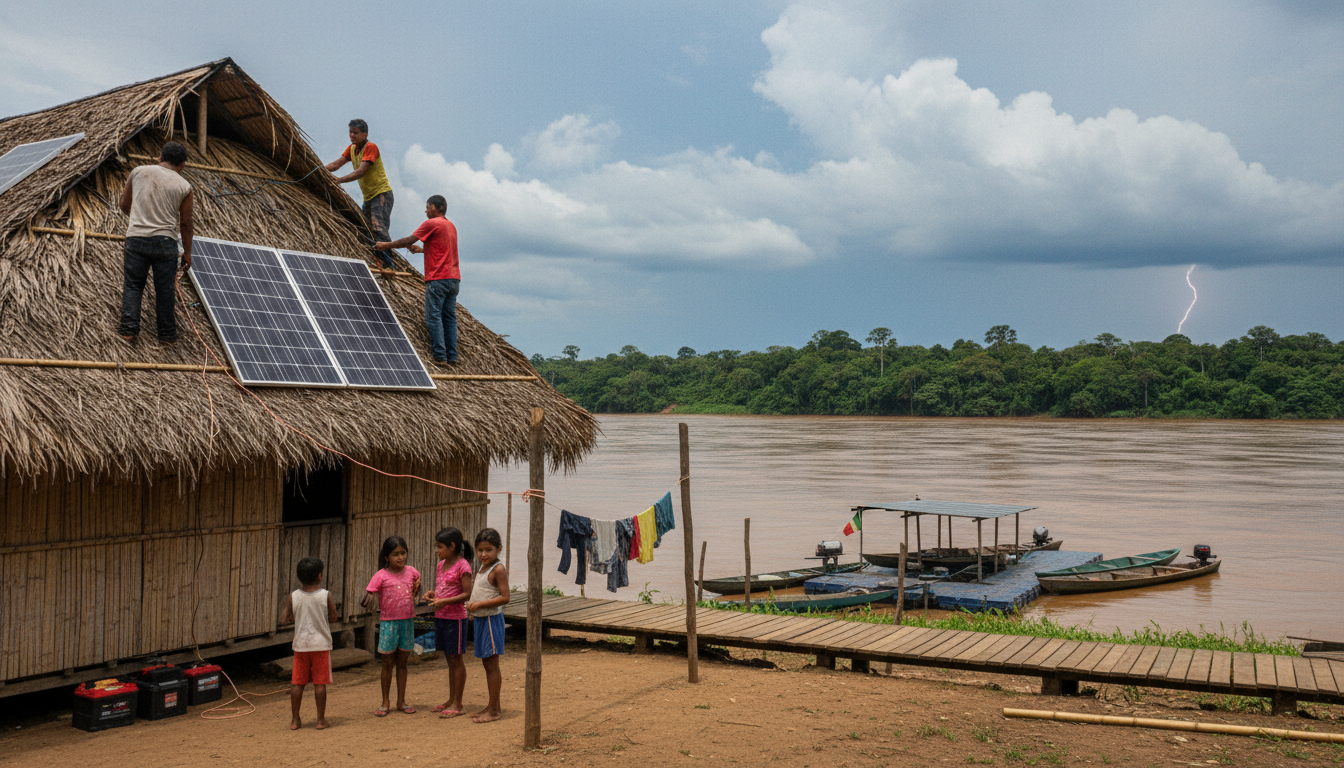
Off-grid solar power systems are expanding across Brazil’s Amazon basin, assisting remote communities in adapting to severe drought conditions and reducing reliance on diesel generators. As of 2026, over 100,000 such systems were operational. In Nova Sociedade, solar panels now energize water pumps, delivering clean water to 36 families, particularly significant after residents had to walk up to 20 kilometers for water during the 2024 drought. These installations extend beyond water access, providing lighting and phone charging for households and supporting schools, health clinics, and local businesses in other locations.
The adoption of solar technology in these Amazonian settings offers a clear demonstration of localized climate resilience. Advocates assert that renewable energy can bolster Indigenous and traditional communities, enhance their ability to withstand climate impacts, and contribute to rainforest protection. The shift away from costly, polluting diesel generators reduces operational expenses and mitigates environmental degradation at a community level. This decentralised energy approach empowers communities directly, providing essential services where grid infrastructure is absent or unreliable.
While the Amazon’s specific geographic and socio-economic context differs from Southeast Asia, the underlying strategic imperative holds relevance. Many coastal and riverine communities across the Asia-Pacific, including in Thailand, face comparable vulnerabilities to extreme weather events and often rely on isolated, expensive energy sources. Implementing off-grid solar in such areas could offer similar benefits: improved water security, reduced energy costs, and enhanced local infrastructure without waiting for national grid expansion.
However, replicating this model demands careful consideration of local conditions and existing policy frameworks. The initial capital investment for solar infrastructure, while yielding long-term savings, can be a significant barrier for remote communities or local governments without external support. Furthermore, successful integration requires appropriate regulatory environments and maintenance capacity. The Amazon’s experience highlights the technical feasibility and community-level benefits, but it does not detail the mechanisms for financing, supply chain establishment, or long-term operational support that would be crucial for broader adoption in varied regional contexts.
The pattern observed in the Amazon demonstrates how targeted energy interventions can address immediate needs while building resilience against future climate disruptions. It also underscores a tension between centralised national energy strategies and the immediate, practical requirements of remote populations. For regions like Thailand, where populations often reside along vulnerable coastlines or river deltas, the question remains whether inland policy will sufficiently address the distinct energy and water security challenges faced by these communities.
Sources
Newsletter
Pacific Daily
A curated briefing from Thailand, Asia-Pacific and the world.