A Private Reckoning, A Public Mirror: The Unseen Shifts in Asia's Homes
In a Singapore court, the failure of a 90-year-old man's claim for maintenance reveals more than just a legal outcome.
SINGAPORE
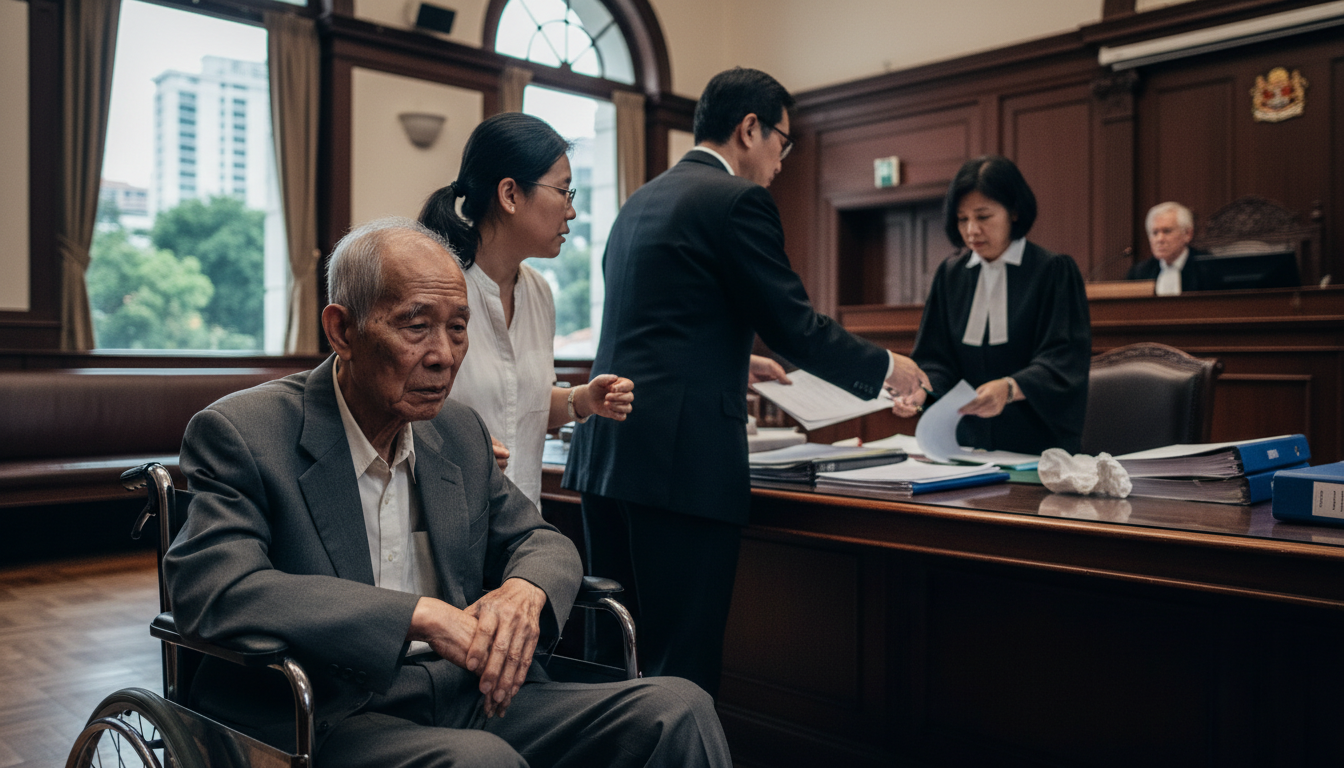
In Singapore, the Family Justice Courts recently deliberated a claim involving a 90-year-old man and his 89-year-old ex-wife. After 64 years of marriage, the man sought maintenance from his former spouse. The outcome, reported on September 16, 2026, was that the claim was unsuccessful.
The woman’s defense centered on the assertion that she had been the sole financier of their home, while her husband, as she claimed, contributed "nothing." She also stated that upon her retirement, she provided him with half of her pension. This specific domestic accounting, brought into public record through a court proceeding, offers a distinct view into the changing dynamics of financial contributions within long-term relationships across the Asia-Pacific.
While the case itself is an individual instance of a legal dispute, it points to a quieter, more widespread renegotiation of roles and expectations within marriages that might otherwise remain unarticulated. The traditional narrative, where a husband's financial contribution is assumed to be primary, is challenged when such a claim reaches adjudication and fails. The court's decision, by not upholding the man's claim, implicitly acknowledges a financial history that deviates from certain established societal patterns.
The question of who finances the home, who sustains the daily life, and how these contributions are valued, becomes visible. In many Asian societies, the financial sphere of a household has long been subtly, or explicitly, gendered. This case, though framed by individual circumstances, signals a legal recognition of a woman's independent financial agency and her significant, even sole, contribution to marital assets. This is not merely about financial independence but also about the formal recognition of labor, both paid and unpaid, within the private sphere.
"The woman claimed that she had financed their home alone while her husband contributed 'nothing.' She also said that she gave him half of her pension after she retired."
Such an event in the courts, however, does not necessarily mean a wholesale shift in all households. Many couples continue to navigate financial roles through established habits, some perhaps unspoken or assumed. The public nature of this specific dispute means that financial contributions from women, previously confined to private knowledge, are now part of a formal judgment. It allows for a consideration of how relationships are constructed financially, especially when those constructions diverge from a perceived norm, revealing the private negotiations that underpin marital stability or dissolution. The public stage of the Family Justice Courts, then, becomes a lens through which these private reconfigurations are brought into view, offering a glimpse of an evolving landscape beneath the surface of everyday life.
Sources
Newsletter
Pacific Daily
A curated briefing from Thailand, Asia-Pacific and the world.