A New Current: Singapore's Surf Story Reshapes Regional Waves
The journey of a single surfer hints at a deeper shift in how Asia embraces its coastlines, beyond traditional expectations.
SINGAPORE
The sea air in Bali carries a particular quality, a blend of salt, tropical blooms, and the distant murmur of activity. A decade ago, this was the backdrop for a family holiday, where a young Camille Spaccarotella first encountered a surfboard. Now, at 21, she prepares to make history as Singapore’s first surfer to compete at the Asian Games in 2026. This trajectory, from holiday pastime to continental competition, offers a subtle reading on the evolving relationship between urban Asia and its natural peripheries.
Singapore, a nation not typically associated with surf culture, sends a singular athlete to chase waves and a podium finish. This is not merely an individual achievement; it is a cultural marker. Historically, the pursuit of competitive surfing was largely confined to nations with expansive, surf-rich coastlines – Indonesia, the Philippines, parts of Thailand. Singapore’s emergence in this arena suggests a broader, more inclusive embrace of coastal sports across the region. It hints at how recreational habits, once exotic, become integrated into national aspirations.
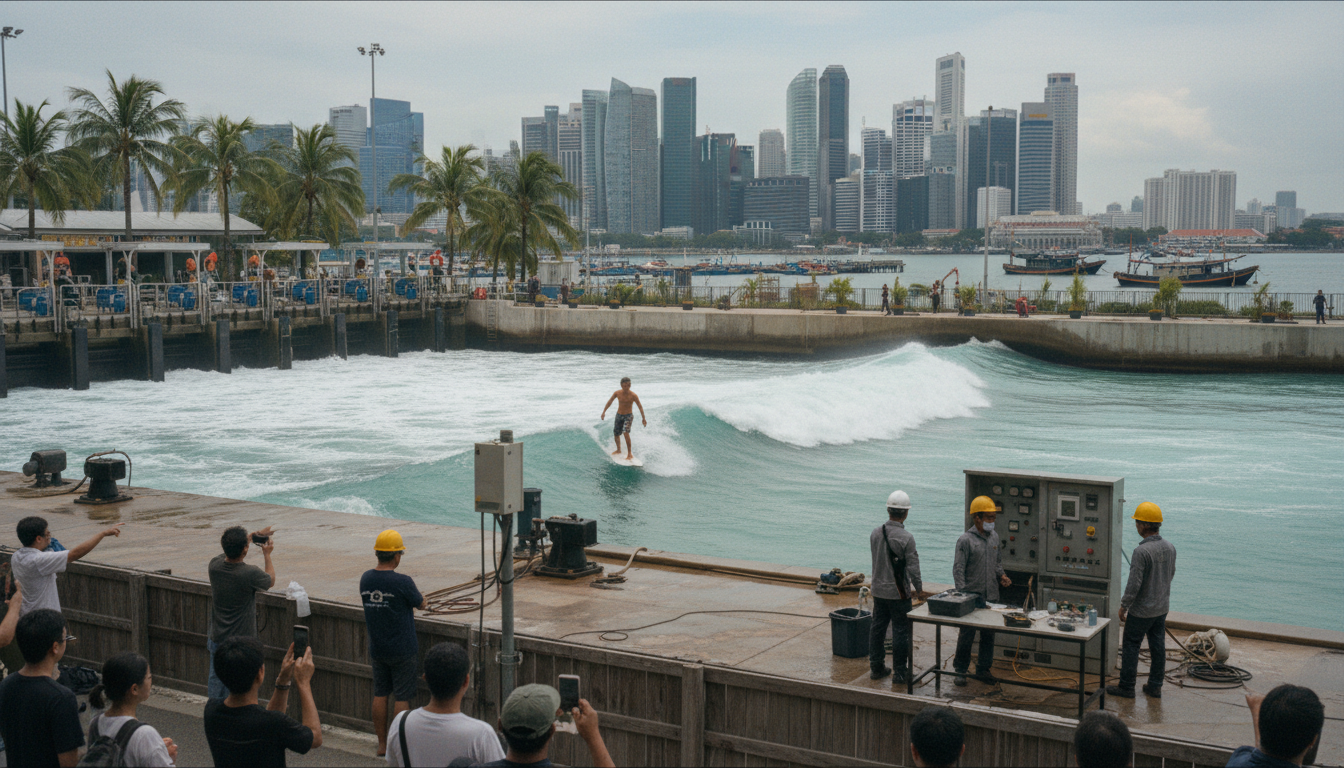
The fact that Spaccarotella's journey began during a family vacation in Bali is particularly telling. It points to the role of regional travel in disseminating cultural practices. Bali, long a crucible for surf culture in Southeast Asia, acts as a practical training ground and an inspirational hub for those from less wave-endowed locales. Her participation in the Asian Games signals a new level of formality and recognition for a sport that has, for many years, existed at the edges of mainstream athletic pursuits in Southeast Asia. This elevation could, in turn, foster greater local investment and participation in coastal activities, even in places without natural surf breaks, through technologies like wave pools.
Yet, this burgeoning interest is not without its tensions. The pristine image of surfing often clashes with the reality of increasing coastal development and environmental pressures. While surfing introduces new communities to the ocean, it also risks inadvertently contributing to the commercialization of shorelines that are already under strain. Singapore’s ability to field a competitive surfer, while impressive, raises questions about resource allocation and whether such achievements reflect a broader, sustainable engagement with marine environments, or a more selective, elite pursuit. The focus on a podium finish, while understandable in competitive sports, might overshadow the larger ecological narratives playing out across Asia’s threatened coastlines.
Ultimately, Spaccarotella’s debut at the Asian Games represents more than just a personal milestone or a national first. It is a visible symptom of a changing regional dynamic, where leisure activities acquired through travel mature into serious athletic endeavors. It illustrates how the flow of people and culture within Asia-Pacific is slowly, almost imperceptibly, reshaping perceptions of what is possible, what is desirable, and what defines success in an increasingly interconnected landscape. The ripples from that family beach holiday a decade ago are now reaching the shores of continental competition, carrying with them new expectations for Asia’s relationship with the sea.
Sources
Newsletter
Pacific Daily
A curated briefing from Thailand, Asia-Pacific and the world.