A Mexico City airport closure: A measure of national pride, a regional risk
When a capital's airspace shuts down for a parade, it speaks to national priorities that Asia-Pacific air hubs might quietly observe.
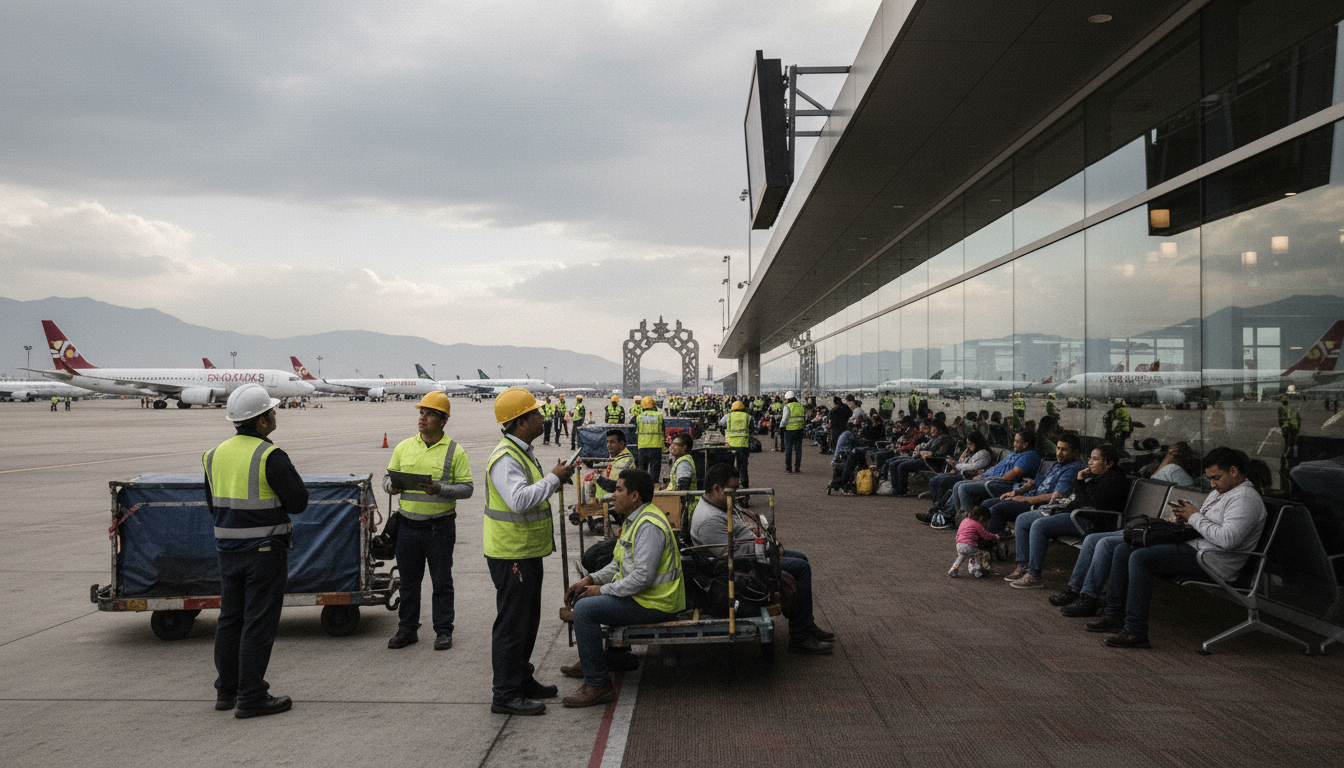
For four hours on September 16, takeoffs and landings will cease at both Mexico City International Airport (AICM) and Felipe Ángeles International Airport (AIFA). This pause, from 10 a.m. to 2 p.m. on a Wednesday, is not due to a storm or an incident, but to facilitate military air maneuvers for Mexico’s annual Independence Day parade. The Mexican Navy, which operates AICM, confirmed the suspension. It is a decision that illustrates a specific national calculus: the symbolic weight of an aerial display takes precedence over the continuous flow of air traffic.
In the Asia-Pacific, where aviation infrastructure is often stressed by growth and competition, such a deliberate, scheduled interruption offers a point of contrast. Mexico’s decision is made in a context where its newest airport, AIFA, opened in March 2022 to ample criticism, primarily concerning low flight volumes. This suggests a capacity that can absorb a four-hour closure more readily than perhaps some of the region's busier hubs. The idea of suspending commercial flights for ceremonial purposes, even for a few hours, would likely be met with considerable scrutiny in, for instance, Bangkok or Singapore, where even minor delays cause cascading effects across networks.
Yet, this is not to suggest that Mexico City’s airports are without their own operational vulnerabilities. Past events, such as an Air Canada jet collision at LaGuardia in 2026, underline that any interruption to airport operations, intended or not, carries inherent risks. The suspension in Mexico City is planned, but it still introduces a deviation from normal operations that requires careful management, even if the primary goal is safety for military aircraft participating in a commemorative event marking the 216th anniversary of independence.
The essential difference lies in the perceived value of the interruption. For Mexico, the Independence Day parade is a significant national event, justifying a temporary operational shift in air travel. For Asia-Pacific nations, where economic integration and seamless connectivity are frequently emphasized, the calculus might lean towards minimizing any disruption to commerce and travel. The question for airports in the region, then, is not whether they could implement such a pause, but whether the cultural or national benefit would be seen to outweigh the economic cost of an enforced silence in their skies. This Mexican example asks those arriving, or departing, to acknowledge a national narrative above the demands of an international schedule.
Sources
Newsletter
Pacific Daily
A curated briefing from Thailand, Asia-Pacific and the world.